
From training to client work: How 3D modelling freelancers in Kakuma maintain quality

When companies first hear about the Creative Gateway program, their reaction is usually a mix of curiosity and caution. The idea is intriguing. Refugee youth in Kakuma are trained in digital skills such as 3D modelling and connected to freelance opportunities with international clients.
But the moment the conversation becomes practical, the questions start to emerge.
How skilled are the 3D modelling artists in a place like Kakuma?
Who checks the quality of the work?
What happens if the output is not usable?
Who manages revisions?
Who is responsible if something goes wrong?
These are not objections. They are the normal questions any responsible company asks before working with remote freelancers.
At Creative Gateway, we treat those questions seriously. They shape how the entire program is designed.
From the beginning, we understood that training alone would not be enough. If participants were going to work with professional clients, the program needed to function more like a managed production environment than a classroom.
That is why every freelancer who eventually works with a client passes through three important stages before any engagement happens.
First comes technical training and portfolio development.
Second comes structured evaluation of skills.
Third comes internal quality control before any work is delivered externally.
Each step exists for a reason.
Training Comes First - Not Client Work
One of the most important principles of the Creative Gateway program is simple: participants do not begin with client projects.
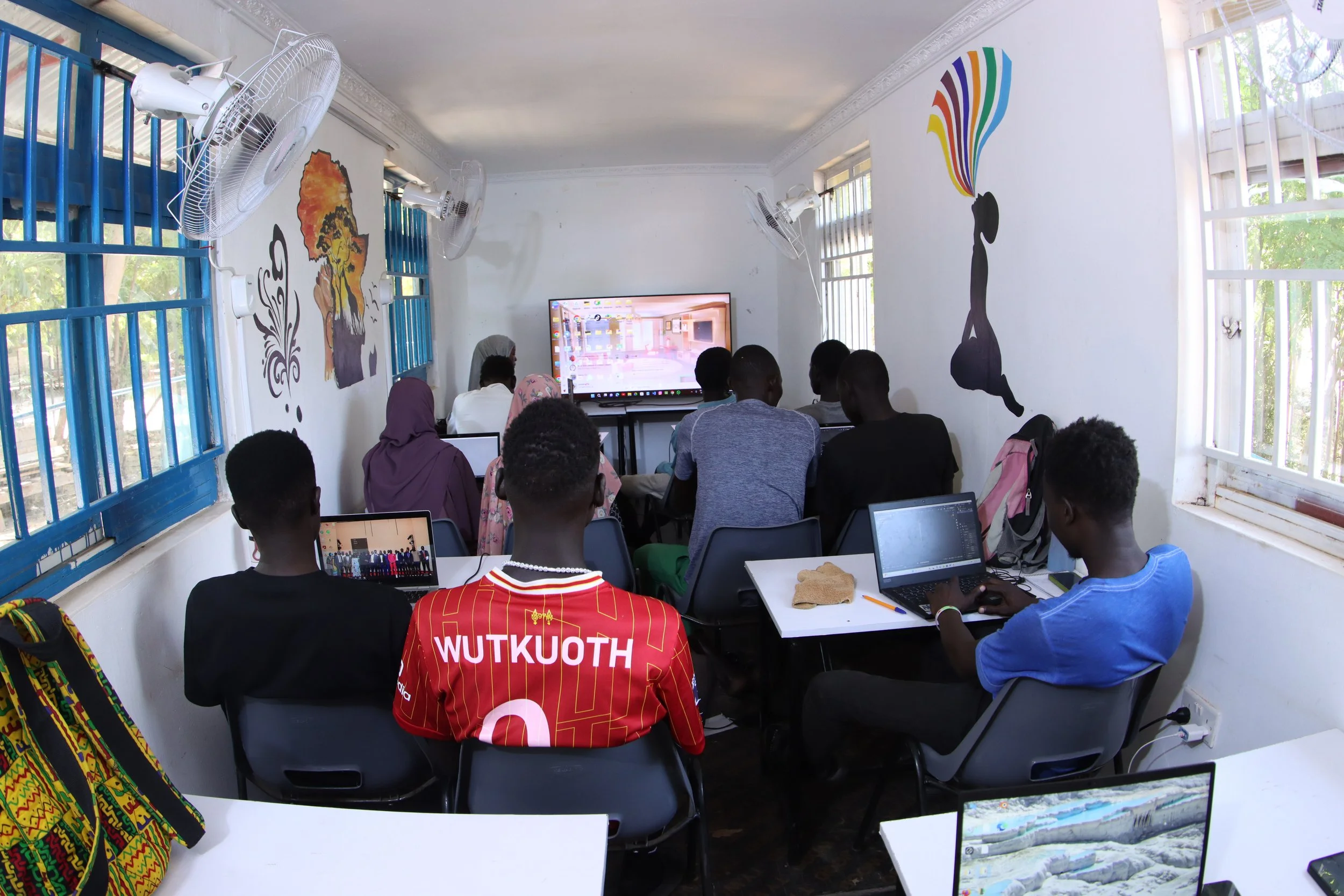
Before anyone works on a real assignment, they spend several months learning the fundamentals of 3D modelling and digital production.
3D modelling is not a skill that can be picked up casually. It requires technical discipline and an understanding of professional standards that are often invisible to beginners.
During the training phase, participants focus on mastering the software itself. They learn how to construct models with clean topology, how to follow reference material accurately, and how to structure their files so that another professional can open and work with them without difficulty.
These details matter more than many beginners realize. A model that looks correct on the surface may still be unusable if the topology is messy or if the file structure creates problems in downstream workflows.
Training therefore focuses not only on how to create objects, but on how to produce production-ready assets.
Participants complete a series of structured assignments that gradually increase in complexity. These exercises are designed to mirror the types of briefs that freelancers encounter in professional environments.
Alongside the technical work, participants also learn the workflow habits that professional freelance work requires. They learn how to interpret briefs, follow reference images closely, respond to feedback, and manage deadlines.
By the time participants finish this stage, they have not only learned the tools but also begun developing the discipline required to use those tools in a professional context.
Only after this stage do we begin evaluating who is ready for the next step.
Structured Skill Evaluation
Training provides the foundation, but it does not automatically mean someone is ready to work with clients.
For this reason, Creative Gateway uses a structured evaluation process to assess each participant’s readiness for professional work.
This framework, currently being further developed by our technical team, allows us to evaluate participants across both technical performance and professional behaviour.
On the technical side, we examine several factors.
We look at modelling accuracy and whether the participant is able to reproduce reference objects correctly. We review topology to ensure the geometry is clean and efficient. We examine file organization and naming conventions to confirm that assets are structured in ways that make them usable in production environments.
These may sound like small details, but in professional digital production they are critical. Clients depend on assets that integrate smoothly into their pipelines.
Participants are also evaluated on their ability to follow instructions carefully. A freelancer may be technically capable but still struggle if they cannot interpret a brief correctly or adapt their work based on feedback.
This is why we also assess professional habits.
Communication, responsiveness, and the ability to meet deadlines are all part of the evaluation. Freelancers must demonstrate that they can work reliably in a distributed environment where clear communication is essential.
The purpose of this evaluation is not simply to filter participants. It allows the team to understand where each individual stands and what support they may still need.
Some participants are ready to begin working on real assignments. Others benefit from additional practice before moving forward.
This careful assessment ensures that people only enter client work when they are genuinely prepared.
Vetting Before Any Client Engagement
Even after training and evaluation, participants do not immediately begin working with external clients.
Before any freelancer is introduced to a client project, their work goes through an internal vetting process.
The team reviews their portfolio in detail. We look at the assignments they completed during training and evaluate whether they have demonstrated consistent quality across multiple tasks.
Consistency matters as much as ability. A freelancer who produces one excellent model but struggles to repeat that standard under deadlines may not yet be ready for production work.
The vetting process also helps us determine what type of projects each participant should begin with.
Some artists may be ready for more technically demanding modelling work, while others may start with smaller tasks that allow them to gain experience while building confidence.
Matching freelancers with the right type of project is essential. When people are placed in assignments that align with their current skill level, they succeed more often and improve more quickly.
Quality Control During Projects
Once a freelancer begins working on a client project, the process does not end there.
Creative Gateway maintains internal quality control throughout production.
Work produced by freelancers is reviewed by program mentors and technical leads before it is delivered externally. These reviews check for modelling accuracy, clean topology, correct file structures, and adherence to the original brief.
If adjustments are required, revisions are handled internally first.
This approach ensures that clients receive work that meets professional standards while also providing freelancers with valuable feedback that helps them improve.
Quality control also protects the relationship between clients and freelancers.
Clients are not expected to manage inexperienced freelancers or troubleshoot technical issues themselves. The Creative Gateway team remains involved throughout the process to support communication, coordinate revisions, and ensure that projects move forward smoothly.
In practice, this means clients are working with a managed creative workforce, not simply a collection of independent freelancers.
Why This Matters for Clients
For companies considering working with Creative Gateway freelancers, this structure removes much of the uncertainty that normally accompanies remote collaboration.
Clients know that the artists they work with have already gone through months of training and portfolio development. Their technical skills have been evaluated. Their work has been reviewed internally before any engagement begins.
During projects, quality control continues to ensure that deliverables meet professional expectations.
Communication channels remain clear, and the Creative Gateway team remains involved to help manage the process when needed.
This allows clients to focus on their projects while knowing that production is supported by a structured system behind the scenes.
Why This Matters for Participants
This system is just as important for the freelancers themselves.
Entering the freelance world too early can be discouraging. Without preparation, new freelancers may struggle with deadlines, client expectations, or technical requirements that they are not yet ready to handle.
The Creative Gateway process is designed to avoid that situation.
Participants build their skills gradually. They practice extensively before taking on real work. When they begin freelancing, they do so with mentorship and quality control supporting them.
This approach allows them to develop confidence through experience rather than pressure.
Over time, that experience becomes the foundation for long-term professional growth.
Building Trust Through Structure
The purpose of these systems is simple.
Creative Gateway is not only teaching digital skills. It is building a structure where those skills can translate into reliable, professional work.
For clients, this means working with freelancers who have already been prepared and supported through a structured process.
For participants, it means entering the global digital economy with the training, discipline, and guidance required to succeed.
And for the program as a whole, it ensures that every project delivered reflects the standards and seriousness that Creative Gateway is committed to maintaining.
Because in the end, trust in remote work is not built through promises. It is built through systems that ensure quality every step of the way.
Hire professional 3D modelling freelancers from Kakuma
The systems we have built around training, evaluation, and quality control exist for one reason: to ensure that our graduates are ready to contribute to real professional work.
Over the past few years, we have seen what happens when talented young people in Kakuma are given the opportunity to develop strong digital skills and connect with the global creative economy. Many of our graduates are now building portfolios, gaining freelance experience, and continuing to refine their craft through real projects.
But the long-term success of this work depends on partnerships.
Companies that are open to working with emerging digital talent play an important role in expanding opportunities for young professionals who might otherwise remain excluded from the global market. At the same time, these companies gain access to a growing pool of motivated and carefully vetted 3D artists who are eager to contribute to meaningful projects.
Creative Gateway exists to make those connections possible. Through structured training, internal evaluation, and ongoing quality control, we ensure that freelancers entering client work are supported and prepared for professional collaboration.
If you are a studio, company, or creative professional looking for reliable freelance support in areas such as 3D modelling, we would be happy to explore how our graduates can contribute to your projects.
If you want to be part of that — as a partner, a funder, an employer, or someone simply curious — let’s connect.
📩 Email our Project Lead, Vincent:
🔗 Have questions about the program? Reach out here:
Creative Gateway Contact Page