
Cohort VI Recruitment Is Open—Here’s How Creative Gateway Selects and Trains 3D Modellers in Kakuma
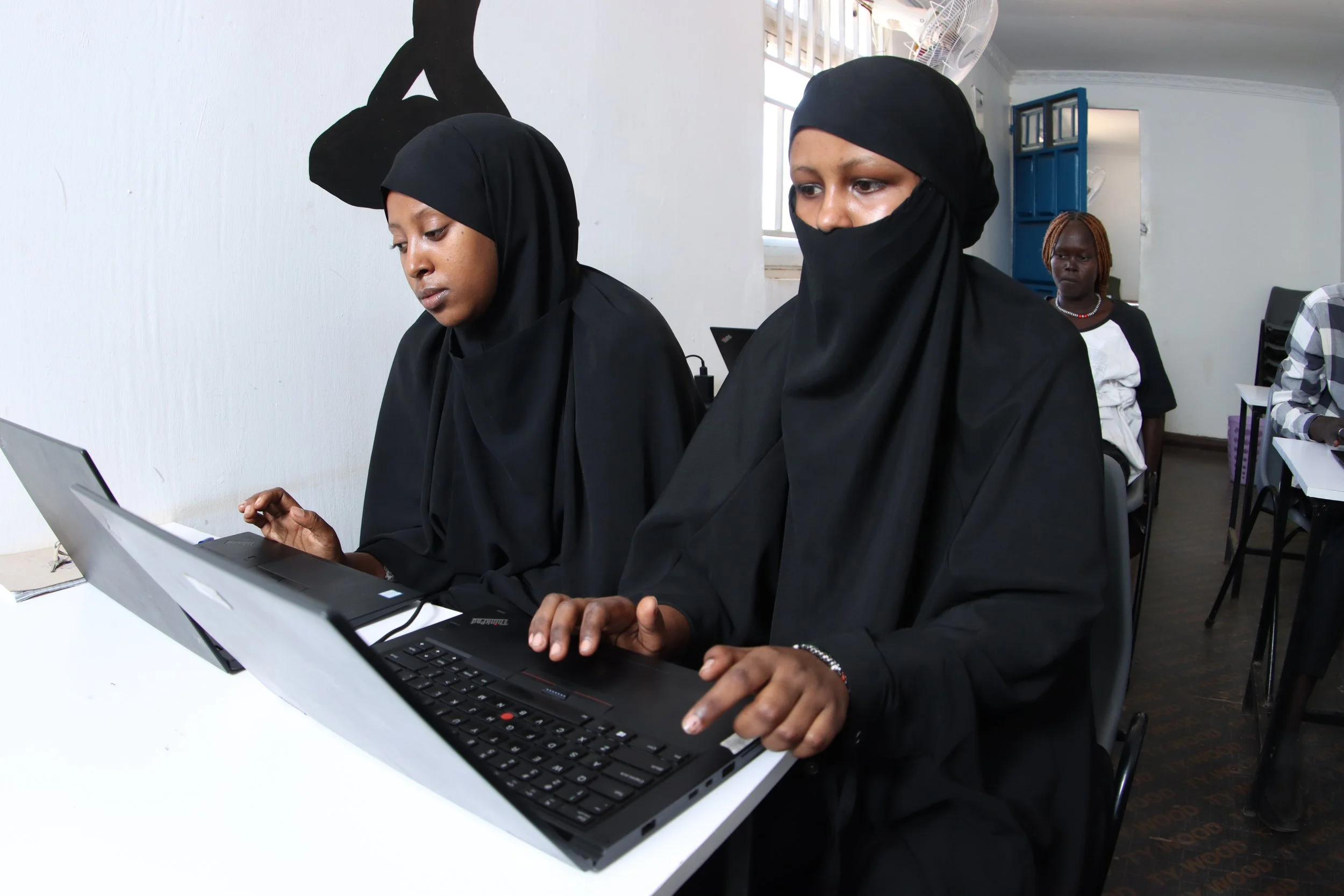
We’re recruiting again for Cohort VI!
Fresh year. New learners. Another group of eager refugee youth from Kakuma ready to turn skill into work.
Cohort VI recruitment opens right after we celebrated our most recent graduation- marking the completion of six months of intensive 3D modelling training.
Recruitment for Cohort VI opens not too long after graduation by design—not because the program is rushed, but because it’s continuous. Each cohort leaves behind more than graduates. It leaves behind lessons—about what works, what doesn’t, where learners struggle, and where they thrive.
It leaves behind clearer standards, stronger facilitation, better pacing, and more realistic expectations of what it takes to succeed in 3D modelling and freelancing from Kakuma.
By the time a new cohort steps in, they’re not starting from scratch. They’re stepping into a system that’s already been tested, refined, and strengthened by those who came before them.
This continuity means everything.
For new learners, it means entering a program with clearer training structures than ever before. Each cohort helps refine how concepts are introduced, how long students need to practice before moving on, and where additional support is required. By the time Cohort VI begins, the curriculum isn’t theoretical—it’s shaped by real learning patterns observed over multiple intakes.
It also means being guided by facilitators who have already seen many learning curves unfold. These trainers understand where beginners typically struggle, how confidence dips midway through the course, and what kind of encouragement or intervention actually helps students push through. Their experience isn’t abstract—it’s built from watching learners in Kakuma navigate the same challenges, again and again.
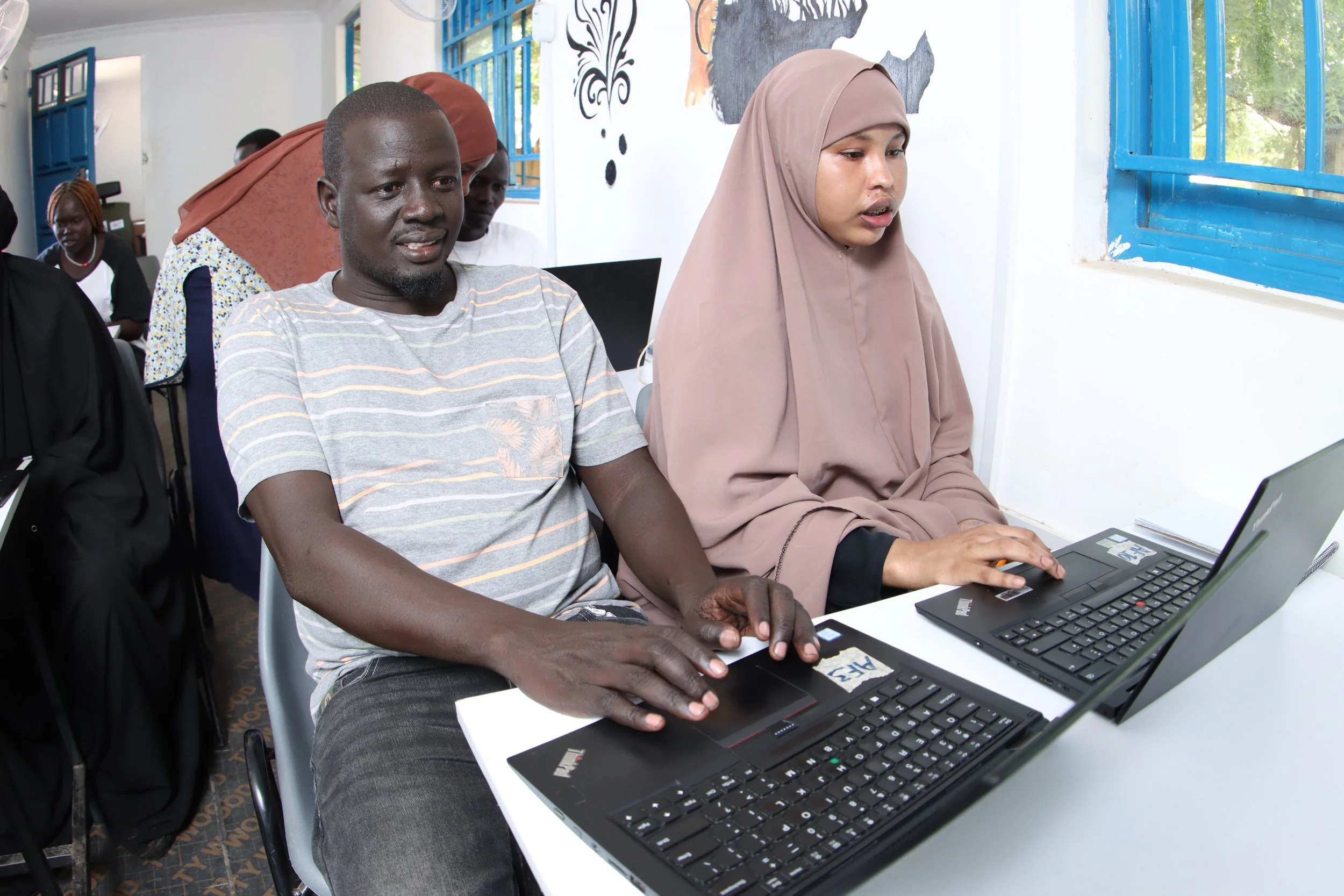
New learners also benefit from something especially powerful: peer mentors who were students just months ago. Graduates from previous cohorts don’t just disappear; many remain involved as facilitators, interns, or informal guides. They bring recent, lived experience into the classroom—proof that the path works, and reassurance that confusion, frustration, and self-doubt are part of the process, not signs of failure.
Finally, expectations are grounded in real outcomes, not theory. New students aren’t told what might be possible someday—they see what has already happened. They hear about real freelance work, real client feedback, and real income earned by people from the same camp. This shifts the tone of the program from aspiration to accountability. The question is no longer “Could this work?” but “Am I ready to do the work it takes?”
The Demand: What We’re Seeing on the Ground
Interest in 3D modelling in Kakuma didn’t appear overnight. It has grown steadily with each cohort, shaped by visibility and results rather than promotion. Early on, most applicants were simply curious—drawn in by the idea of learning something new. Today, the interest looks very different. It’s more informed, more intentional, and more specific.
A major shift happened once graduates began freelancing and earning. When learners started securing paid work—sometimes from clients thousands of kilometres away; the program stopped being abstract. It became tangible. People could see the outcome, not just the promise. The conversation changed from “What is this course about?” to “How did they get that client?” and “What skills do I need to do the same?”
Word-of-mouth has played a powerful role. In Kakuma, news travels fast, especially when it’s backed by proof. Young people don’t just hear that the program exists- they see peers working on laptops, talking about deadlines, sharing stories of their first payments, or mentoring others. That visibility matters. It builds trust in a way no poster or announcement ever could.
What’s striking now is the quality of motivation among applicants. Many come in already having a basic understanding of what 3D modelling is, how freelancing works, and what kind of effort the training requires. Some reference specific graduates by name—not just the program itself. They talk about portfolios, clients, platforms, and practice hours. This signals a deeper understanding of what they’re signing up for.
What We Actually Look for When Recruiting
One of the most common questions we get is simple: “What do you look for when selecting students?”
The answer matters—especially in a place where opportunities are limited and competition is real.
To be clear, we’re not selecting based on prior tech experience or formal education level. Many of our strongest learners had never opened 3D software before joining. Some didn’t see themselves as “technical” at all.
Basic computer literacy is essential. Learners need to be comfortable using a laptop, navigating files, typing, and following instructions on screen. These are small things, but they form the baseline for everything that comes next.
Consistency is also at the top of that list. 3D modelling is demanding. Progress comes from showing up, practicing regularly, and staying with the work even when it feels slow or confusing. Learners who succeed aren’t necessarily the fastest—they’re the ones who keep going.
We also look for a problem-solving mindset. 3D modelling involves trial and error, mistakes, and frequent revisions. Strong candidates are willing to experiment, ask questions, and work through challenges rather than give up when something doesn’t work the first time.
Reliability matters too. This is a six-month intensive program, not a drop-in workshop. We look for applicants who can commit to showing up consistently and taking responsibility for their learning. Being present—mentally and physically—makes a real difference over time.
Openness to feedback is another key factor. Learners receive constant input from facilitators, peers, and sometimes clients. Those who grow the most are willing to listen, adjust, and try again without taking feedback personally.
Patience is essential. Complex tools take time to understand. There are moments in the program where progress feels invisible, and frustration creeps in. Successful learners accept that discomfort as part of the process.
And finally, we look closely at motivation. Wanting a job is understandable—but it’s not enough on its own. We’re looking for people who want to build a skill, who are curious about the work itself, and who are prepared to invest effort long before any income shows up.
As we often say, 3D modelling is not easy. Talent helps, but discipline matters more.
For applicants, this transparency helps set realistic expectations. For partners and supporters, it builds trust. And for the program itself, it helps ensure that the learners who join are ready to take full advantage of the opportunity.
In the end, the goal isn’t to find people who already know 3D modelling. It’s to find people who are ready to learn it properly.
Cohort VI comes at a moment when the pathway is clearer than it’s ever been.
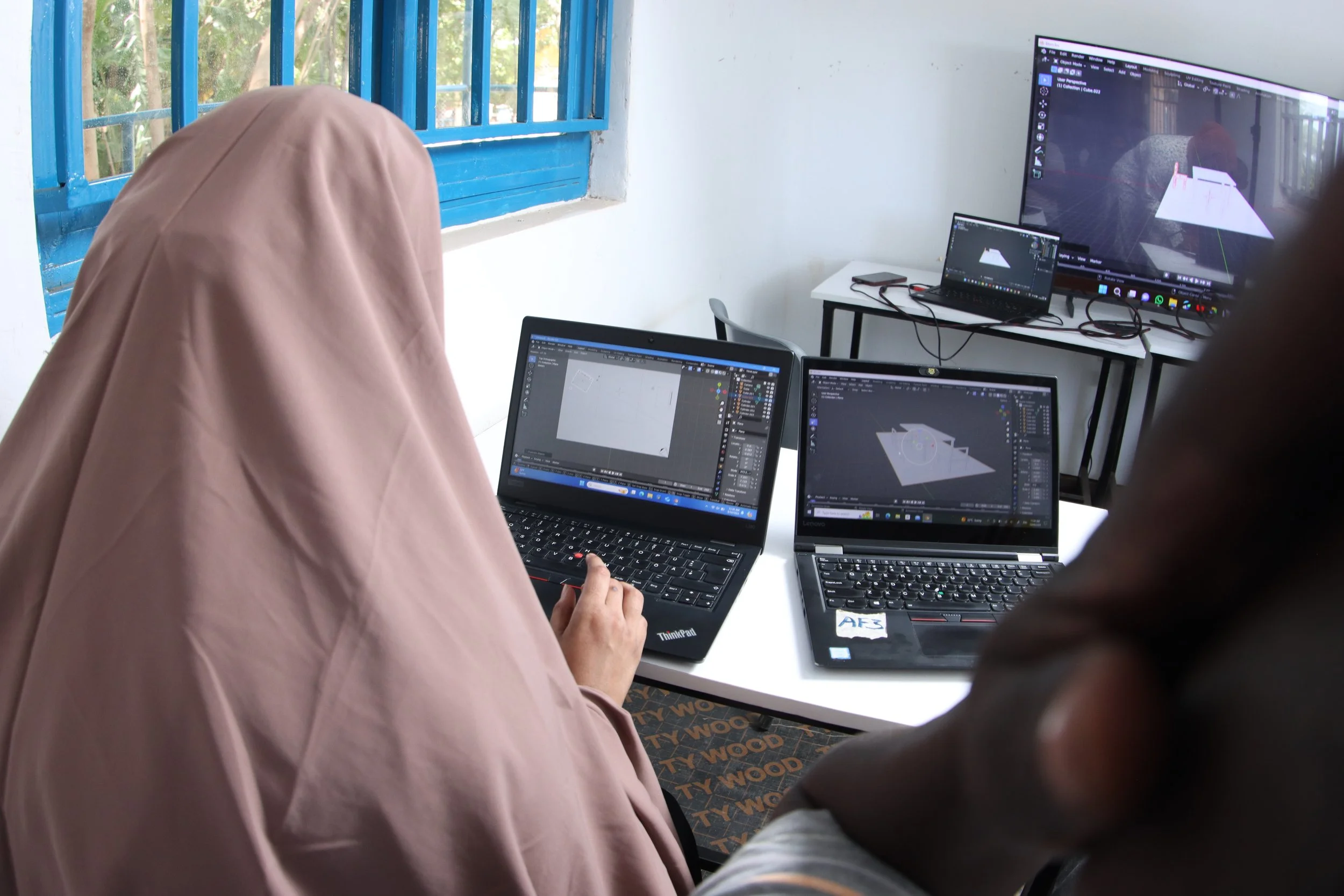
Cohort VI arrives at a moment when there is far less guesswork than before. The pathway is clearer. The standards are defined. The expectations are shaped by real outcomes, not assumptions. What used to be theoretical is now visible — in the work produced, the confidence graduates carry, and the fact that earning from Kakuma is no longer an exception.
For young people considering applying, this matters. Joining now means stepping into a program that knows what it takes — and expects the same seriousness in return. There are no shortcuts here. But there is a clear path, built from learning, practice, and real work.
For partners and supporters, this moment signals something else entirely. This is what sustained impact looks like when a program is allowed to mature. Not a reset every six months, but a system that learns, tightens, and raises its own bar over time.
Cohort VI recruitment is now open.
For those ready to commit to the work, this is the entry point.
And for those paying attention, this is what it looks like when a skills program stops proving itself — and starts building forward.