
When humanitarian funding shrinks, what happens to Refugee Livelihoods?
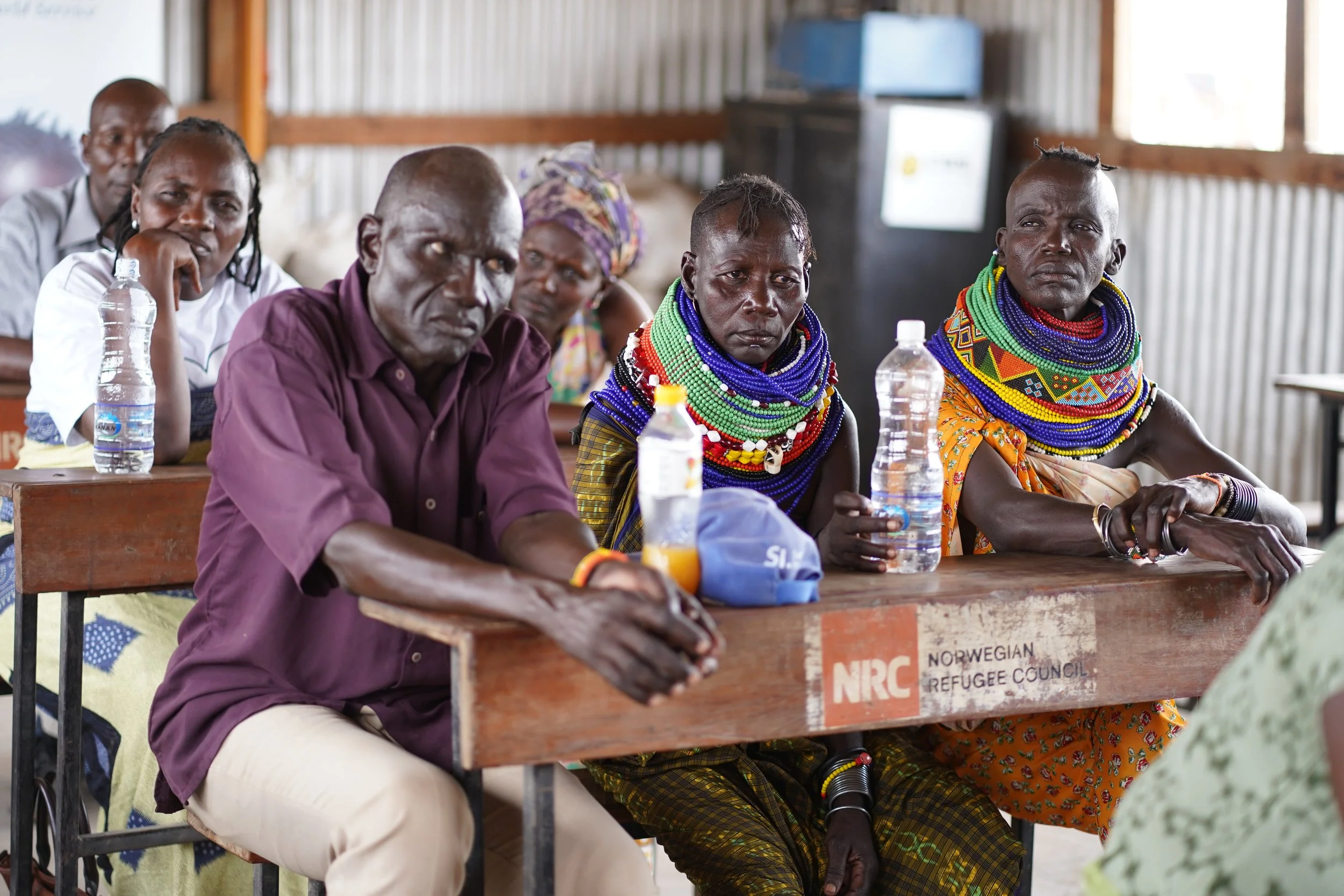
The humanitarian sector is facing a reckoning.
In early 2025, a wave of funding cuts swept through the global aid system. Major donor governments- led by the United States- began cancelling large portions of their humanitarian commitments. In the case of USAID alone, roughly 4 out of every 5 grants were withdrawn. Other donors, including in Europe, followed closely behind.
This is not a short-term problem that will fix itself next year. Funding has been cut at a scale that is forcing the humanitarian system to shrink.
Across Africa, the consequences of these funding cuts are already visible- and accelerating. Health facilities are shutting their doors or operating with skeleton staff. Nutrition programs are reducing coverage or ending entirely, even in places where malnutrition rates remain high. Education initiatives are being paused midstream, leaving classrooms without teachers and learners without continuity.
For the communities that rely on these services, the impact isn’t theoretical or long-term. It shows up immediately: longer distances to the nearest clinic, fewer meals for children, interrupted schooling, and growing uncertainty about what support will still exist next month. What disappears isn’t just a service- it’s stability.
What makes this moment especially stark is that it is not paired with a reduction in need. Displacement has not slowed. Refugee camps like Kakuma remain densely populated. Conflict, climate shocks, and economic pressure continue to push people into situations where support is essential, not optional.
Young people are still coming of age in environments with limited access to formal education, employment, or mobility.
Therefore, in places like Kakuma, the crisis hasn’t ended. Needs are still structural and long-term- but the system responding to them is being scaled back anyway.
How U.S. Funding Cuts Are Affecting Refugee Communities in Kenya
The recent U.S. funding cuts have not only reduced budgets on paper- they have reshaped daily life for refugee communities across Kenya.
One of the most immediate impacts has been on food security. The United States had been one of the largest contributors to the World Food Programme’s operations in Kenya. When that funding was abruptly withdrawn, WFP was forced to reduce food rations in camps like Kakuma to the lowest levels in their history.
For hundreds of thousands of refugees who rely on food assistance to survive, this meant smaller portions, longer gaps between distributions, and increased hunger inside already vulnerable households.
At the same time, disruptions in global aid funding have affected the supply of therapeutic food used to treat severely malnourished children. Community outreach programs that screen children for malnutrition have scaled back, and health facilities are seeing children arrive in more critical condition. When treatment is delayed, the consequences can be permanent; affecting growth, immunity, and cognitive development.
The effects extend beyond food.
Kenya’s public health system is heavily supported by international donors, particularly in areas such as HIV, tuberculosis, and malaria treatment. Funding cuts are placing pressure on medicine supply chains, community health networks, and local organizations that provide testing, prevention, and adherence support. When funding contracts, it doesn’t just slow programs- it risks reversing hard-won public health gains.
There is also an economic ripple effect. Nairobi hosts major United Nations offices and international agencies that employ thousands directly and support many more through related businesses and services. A reduction in U.S. contributions has forced some programs to scale down or restructure, affecting jobs, procurement, and the broader service economy linked to humanitarian operations.
For refugee communities like Kakuma, this creates a layered crisis. Food assistance shrinks. Health services strain. Employment opportunities tied to humanitarian agencies become less stable. Yet displacement continues, and young people are still coming of age with limited access to formal work.
These funding cuts are not abstract policy decisions. They translate into smaller meals, fewer services, lost jobs, and growing uncertainty about what support will remain. And in that environment, the need for income pathways that do not rely entirely on external aid becomes even more urgent.
The False Trade-Off: Survival vs. Sustainability
When funding shrinks, humanitarian systems are often pushed into a difficult choice: focus only on immediate survival needs, or continue investing in livelihoods and skills. In moments of crisis, survival understandably comes first. But over time, this choice creates a problem.
When livelihood pathways are cut, need doesn’t disappear. It grows. People who could earn are left with no option but to rely longer on food aid, health services, and cash support. Emergency systems end up carrying more pressure, not less.
This is especially true for young people. Without access to work or skills, days turn into months of waiting. Motivation fades. Frustration builds. Young people in Kakuma Refugee Camp aren’t idle because they lack ambition- they’re idle because there is no clear path forward.
When emergency aid has no exit, crisis response becomes permanent. It keeps people afloat, but it doesn’t help them move beyond survival. And as funding tightens, this model becomes harder to sustain.
Why Digital Skills Still Make Sense in a Contracting System
When resources are shrinking, it can seem risky to invest in skills-based programs; especially digital ones. But this is exactly why digital livelihood programs like ours matter in a place like Kakuma:
Digital work doesn’t depend on the local job market, which in many camps is already overcrowded and underpaid. It doesn’t require travel permits or access to nearby cities. Once someone has the skill, they can work from where they are.
Digital skills also don’t disappear when funding ends. They grow with use. The more someone practices, the better they get. The more projects they complete, the more confident and employable they become. Unlike short-term assistance, digital skills like 3D modelling continue to pay off over time.
There is also a wider impact. When one person earns independently, they rely less on aid. That income helps cover food, health costs, school needs, and household expenses. This reduces pressure on multiple support systems at once.
In a system with fewer resources, programs that help people earn beyond the camp economy are not optional. They are practical. They create income where none existed before.
So What Needs to Change?
If humanitarian funding is shrinking and likely to remain uncertain, then the question is no longer how to preserve every program as it exists today. The question is what kinds of programs still make sense in this reality.
The problem isn’t just funding shortages. It’s that too many programs are designed to work only while money is flowing.
Programs can no longer be built around short timelines, quick outputs, or the assumption that another funding cycle will arrive before the current one ends. They have to be designed to hold up when funding pauses, changes, or disappears altogether.
That means prioritizing approaches that leave people stronger at the end of the intervention than they were at the beginning- approaches that don’t collapse the moment external support is reduced.
What We Should Expect Instead?
In this moment, impact has to mean more than short-term relief. It has to show up in what people are able to do after a program ends.
That means expecting programs to leave people with skills they can continue using on their own, without constant follow-up or repeated assistance. Skills should translate into real ability—something a person can apply again and again, long after formal training is over.
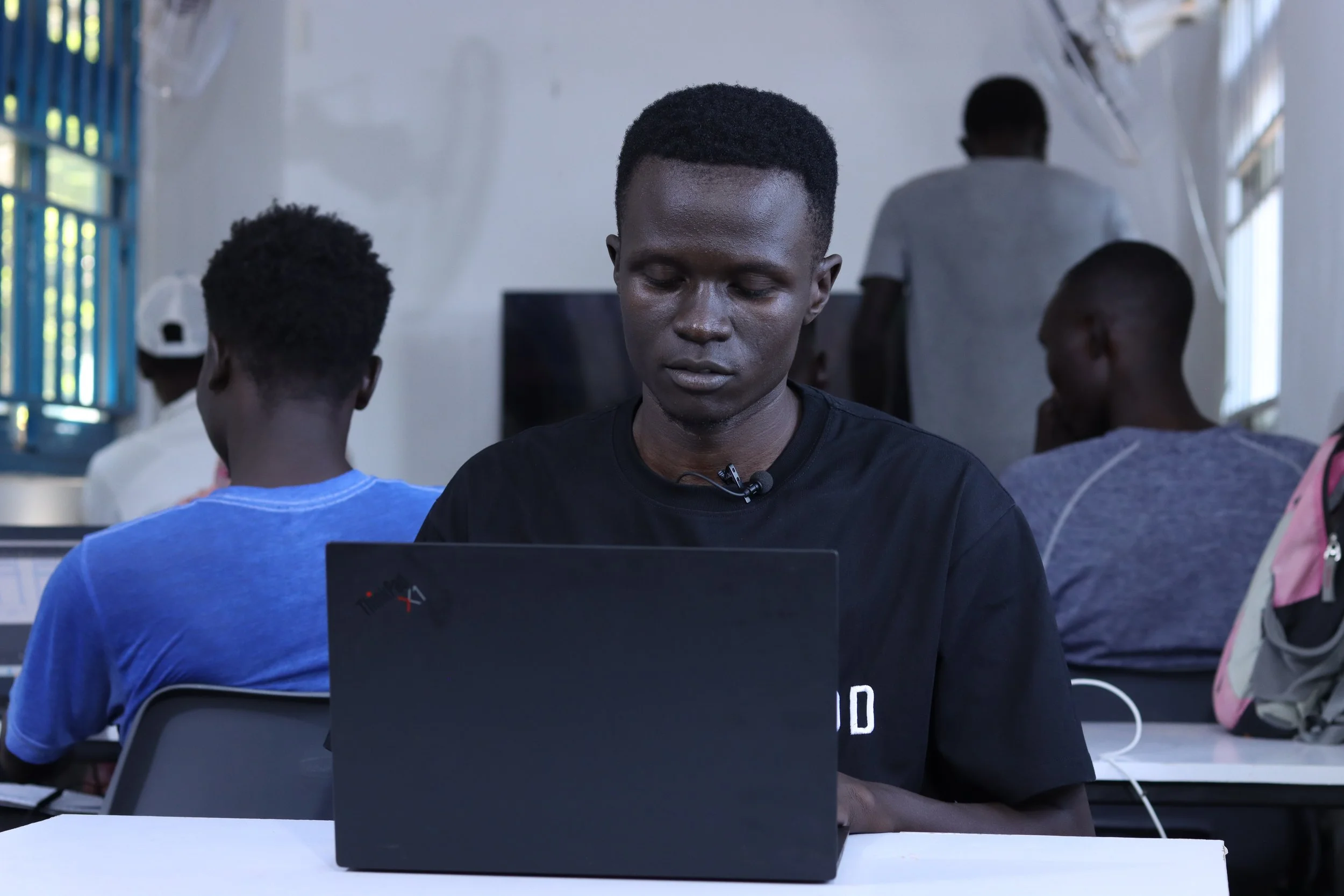
This is the standard we aim for at Creative Gateway. Our focus is not on exposure, but on use. Graduates leave with practical skills they can keep building on- through personal projects, freelance work, and ongoing learning- without needing the program to continue holding their hand.
It also means creating ways for people to earn that aren’t tied to fragile local economies or restricted movement. In places like Kakuma, where jobs are limited and permits are difficult to obtain, income pathways need to extend beyond the camp itself.
For our graduates, this has meant freelancing with European clients outside Kakuma, earning independently, and supporting their households through work that travels digitally, even when they cannot.
Finally, impact should ease pressure on the humanitarian system over time. When people can meet basic needs through their own income, reliance on food aid, cash assistance, and emergency services begins to decrease. This doesn’t replace humanitarian support but it helps prevent the same needs from repeating year after year.
In short, we should expect programs to help people move from relying on support to relying on skills. That is the difference between temporary relief and lasting capacity; and it’s the kind of impact that matters most in a system facing long-term contraction.
A Note to Our Partners
The progress described here didn’t happen in isolation. It was made possible because a small group of partners chose to invest in work that takes time, iteration, and trust.
Support from LWF Kenya Somalia, Act Svenska kyrkan, ALWS, and UNHCR Kenya has allowed Creative Gateway to focus on depth rather than speed—to build a program that learns, adapts, and stays long enough for skills to turn into real work.
In a moment when many programs are being scaled back or shut down, this kind of partnership has made it possible to keep building something that lasts.
If you’re interested in supporting pathways that move young people in Kakuma toward real skills, real work, and real income—and doing so as a contributor, not a spectator—we’d welcome the conversation.
📩 Email our Project Lead, Vincent: vincent@ambitiousafrica.org
💬 Have questions about the program? Reach out via the Creative Gateway Contact Page.
We’re always open to thoughtful partnerships that strengthen this work and help it grow responsibly.