
Why a Digital Skills Program in Kakuma makes more sense than ever in 2026
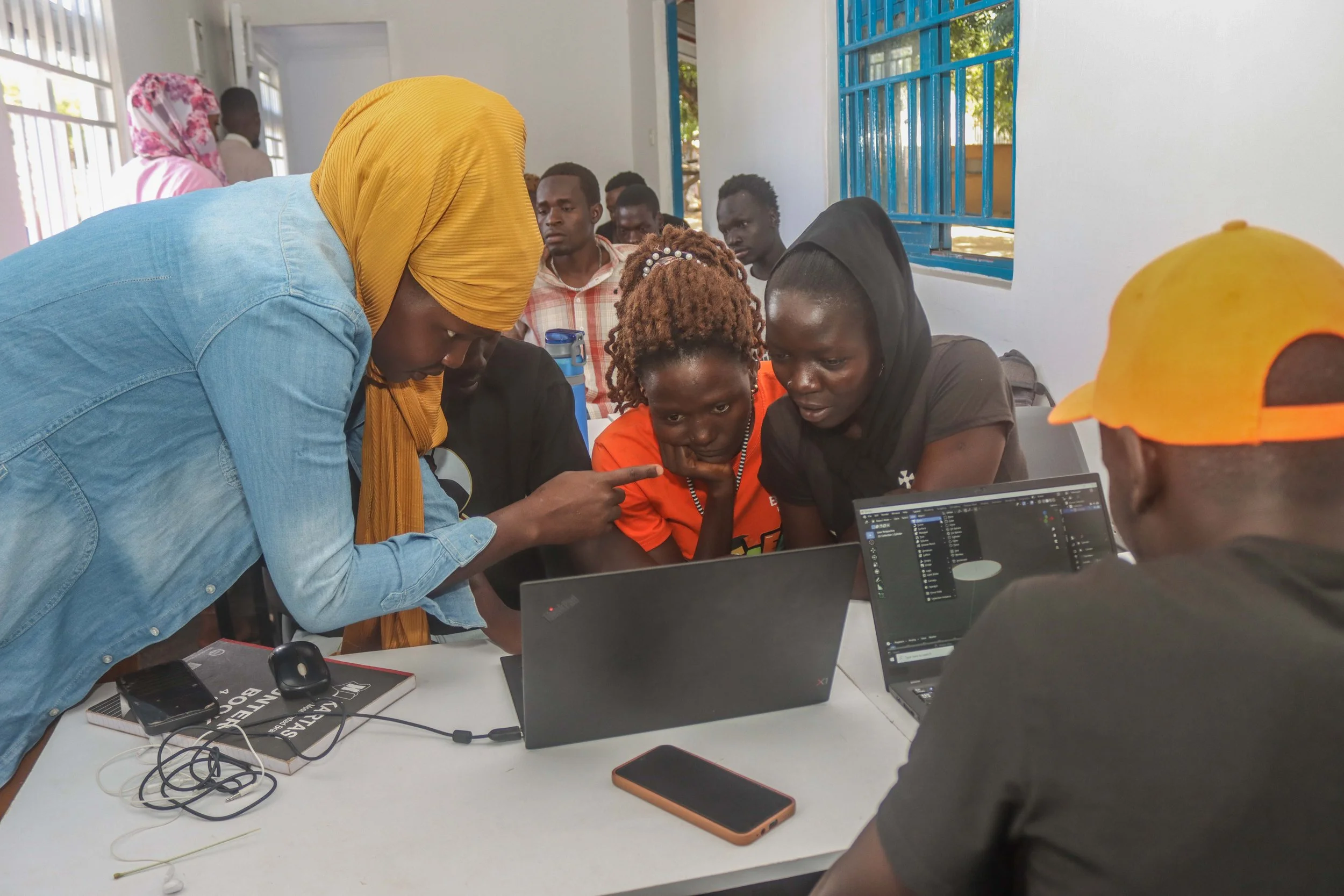
When people hear “digital skills program in a refugee camp,” they often assume it’s unrealistic - too technical, too advanced, too far removed from daily life. But in Kakuma, the opposite is true. Digital skills are not the ambitious option. They are the most practical response to the limits of the local economy.
The camp is physically remote, movement is restricted, and formal jobs are scarce. Most livelihood options depend on a small, oversaturated local market where too many people are competing for too few opportunities.
Digital work doesn’t rely on any of that. It doesn’t require access to city jobs, permits to travel, or local demand. It only requires skill, consistency, and the ability to work online.
When we launched the Creative Gateway Program three years ago, digital skills training in Kakuma was still rare.
Not because there was no interest. Not because young people weren’t capable. But because digital skills programs in refugee camps sit at an uncomfortable intersection- too long-term for emergency response, too technical for traditional livelihoods programming, and too uncertain for quick wins.
Most interventions in Kakuma have historically focused on what feels immediately feasible: short vocational courses, small business grants, or temporary employment schemes tied to the local economy. These approaches make sense in the short term. They’re visible, measurable, and easier to implement in constrained environments.
Digital skills, on the other hand, demand patience.
They require stable training over months, not weeks. They require equipment, electricity, and internet in places where all three are unreliable. And they require a belief that refugee youth can compete; not just locally, but globally; if given the right tools and time.
Three years ago, few programs were designed to take that bet.
What has changed since then is not the context of Kakuma, but the evidence. As more of our Creative Gateway graduates began freelancing, earning, and working with clients outside the camp, digital skills stopped feeling experimental. They became practical. The idea of a digital skills program in Kakuma shifted from “aspirational” to “proven.”
That shift is part of why interest looks different today- and why skills-based programs are no longer an exception, but a necessary evolution.
Why short-term training programs rarely lead to long-term income
In refugee contexts, one-off approaches are common. Short workshops that introduce a tool or concept. Two- or three-week vocational courses. One-time business grants or cash-for-work opportunities tied to local demand.
These interventions are not misguided- they often respond to urgent needs and limited resources. They are also easier to implement, easier to measure in the short term, and easier to exit.
But they rarely change a person’s long-term earning capacity.
A short training can introduce awareness, but it doesn’t build competence. A workshop can spark interest, but it doesn’t create confidence. A grant can relieve pressure temporarily, but it doesn’t create a skill that compounds over time. Without enough time to practice, struggle, fail, receive feedback, and try again, learners are left with exposure rather than ability.
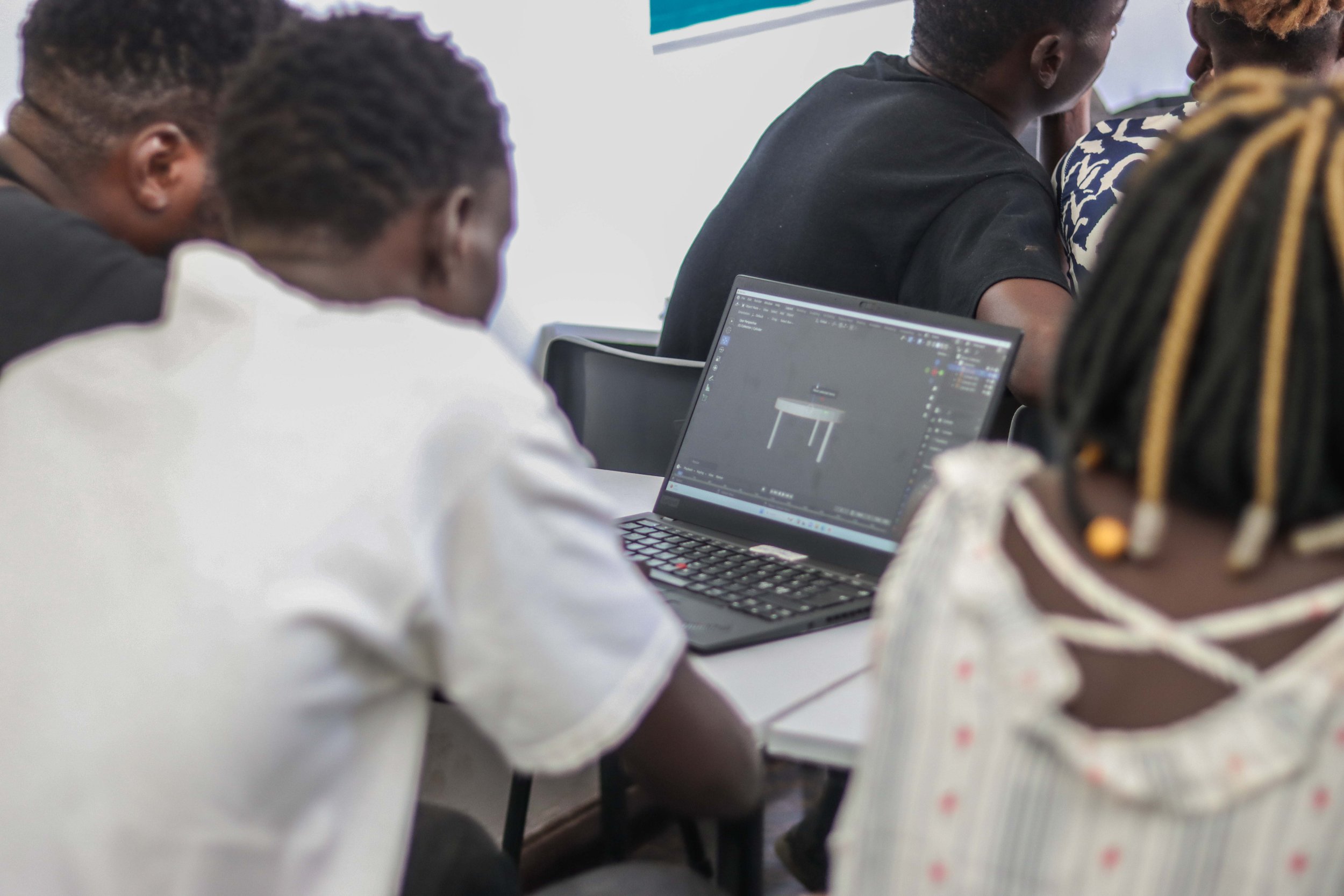
This gap is especially clear with complex digital skills like 3D modelling. These tools are not intuitive. They require repetition, frustration, and sustained effort before results appear. Compressing that process into a few weeks almost guarantees shallow outcomes- regardless of motivation.
Creative Gateway was designed with this reality in mind.
When we first ran the program, we committed to a 6-month intensive training period. That decision wasn’t arbitrary. It reflected the time learners actually needed to move from zero exposure to functional skill, and from classroom learning to real-world application. Over those months, students didn’t just learn software- they built discipline, learned how to troubleshoot problems, received ongoing feedback, and began understanding what professional work actually demands.
At the same time, the program itself was learning. By observing where learners struggled, where momentum dipped, and where progress accelerated, we were able to refine the structure.
Based on what we’ve learned, the current training cycle has been redesigned into a 5-month program; not shorter because the work is easier, but tighter because the sequencing is clearer. Concepts are introduced more intentionally. Practice time is better allocated. Expectations are sharper.
This is the advantage of a skills-based program that runs continuously rather than as a one-off. It doesn’t aim to deliver quick results. It aims to build capability and then improve how that capability is built with every cohort.
In Kakuma, where opportunities are limited and mistakes are costly, this distinction matters. Skills-based programs work not because they promise more, but because they demand more- from the program, and from the learners themselves.
What Happens After Training Ends (Most Programs Stop Here)
For many programs, training is the finish line. Once certificates are issued or sessions end, support tapers off and learners are left to figure out how to turn new knowledge into income on their own.
This is where most skills programs break down.
At Creative Gateway, training is only the beginning. The real question we ask is not “Did learners complete the course?” but “Can they actually use this skill to work?” That shift in focus changes everything.
Graduates are supported to move toward freelancing through concrete pathways. They learn how to build portfolios that reflect real ability, not simulated exercises. They are exposed to actual briefs, deadlines, and expectations that mirror professional work. This transition, from learning to doing, is intentional, not assumed.
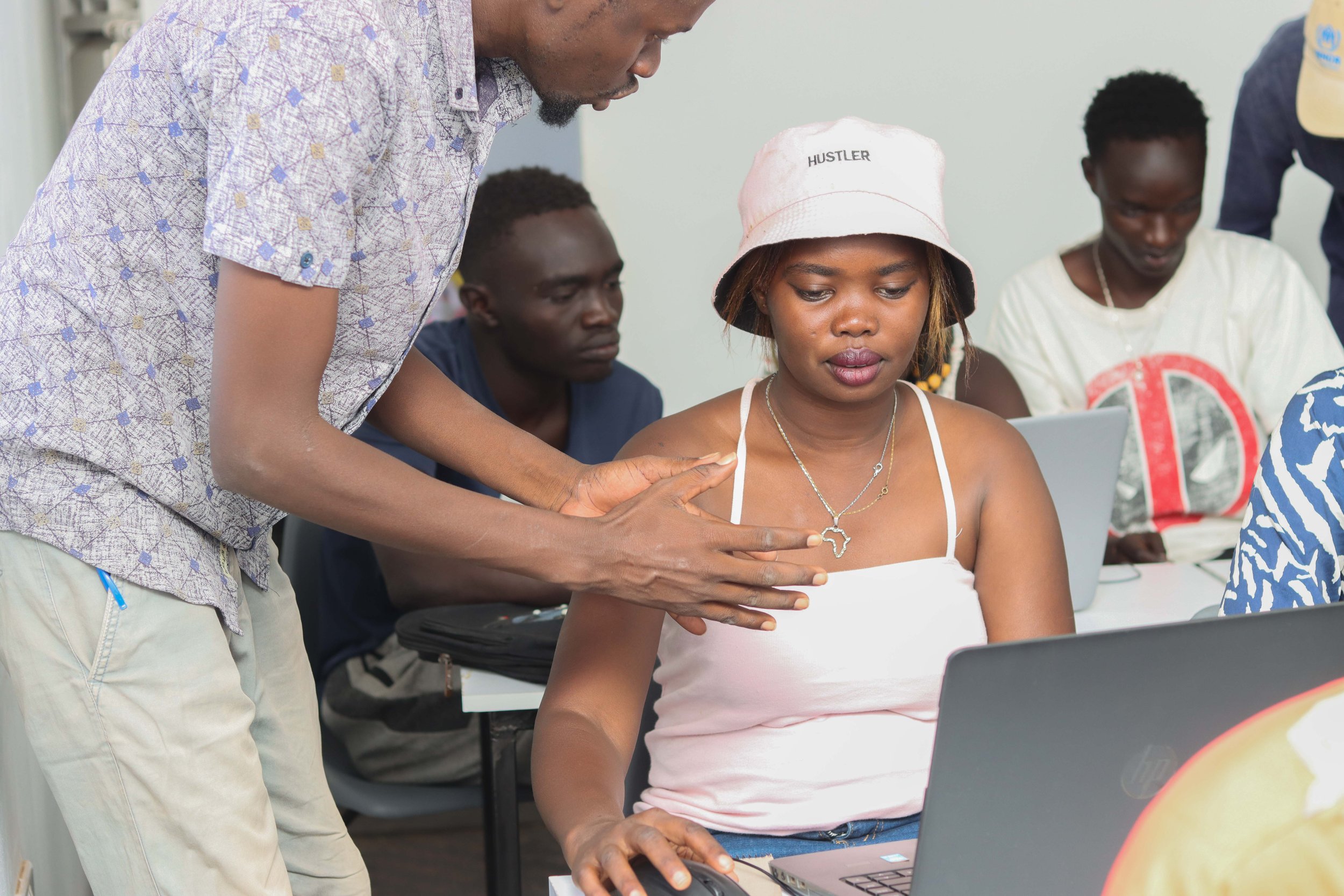
Mentorship plays a key role here. Graduates continue to receive guidance from facilitators and peers who have already navigated early freelance work themselves. Feedback doesn’t stop once the classroom sessions end. It deepens. Learners review work together, troubleshoot challenges, and refine their output based on real client input.
Access matters too. Continued access to learning spaces and equipment allows graduates to keep practicing, iterating, and improving. Skills don’t disappear when training ends- but they do stagnate without space to apply them.
Most importantly, learners begin receiving real client feedback. Not grades. Not hypothetical praise. Actual responses from people paying for their work. This feedback loop is what turns training into a pathway from training to work- and what makes digital livelihoods for refugees viable in practice, not just in theory.
Conclusion
How long can camps like Kakuma rely on systems that help people survive but never help them earn independently?
Humanitarian assistance has done what it was designed to do: keep people alive during a crisis. Food distributions, health programs, education support, cash assistance- these interventions matter deeply. They stabilize households in environments shaped by displacement and restriction.
But they are not built to create income.
And when funding was more predictable, that gap could be tolerated. Aid covered survival. Livelihood programs operated at the margins. The system expanded when crises expanded. Now that funding is shrinking, that structure becomes fragile.
If people cannot generate income on their own, the pressure on emergency systems only increases. Food assistance has to stretch further. Health services carry heavier loads. Cash programs absorb more demand. The system ends up doing more with less, while the underlying economic reality inside the camp remains unchanged.
This is where digital skills shift the equation. Digital skills are not a miracle solution. They do not replace emergency response. But they are one of the few livelihood pathways that:
• operate beyond the limits of the camp economy
• strengthen rather than expire over time
• reduce strain on aid systems instead of increasing it
• and allow young people to act, not just wait
In 2025, in Kakuma, this is not about being ambitious. It is about being realistic.
If funding is becoming less reliable and displacement is not slowing down, then programs that help people earn on their own are not a luxury.
They are a necessary part of the solution.