
You're looking for a 3D modeller for a project in Finland. Maybe you're launching a new furniture collection and need realistic product images for your catalogue. Perhaps you're an architect preparing visuals for a client presentation, or you run a creative agency and need an extra pair of hands to get a project finished on time.
Whatever the project, you probably have a few things in mind. You want someone who understands what you're asking for, produces good work, meets your deadlines and charges a price that makes sense for your business.
And if you've already started comparing 3D modelling services in Finland, you've probably discovered that prices can vary quite a bit.
But here's a question worth asking before you commit to a supplier: Does your 3D modeller actually need to be based in Finland?
For many projects, the answer is no.
Today, you can work with a skilled 3D artist from almost anywhere in the world. As long as they have the right skills, a clear brief and a reliable way to communicate with you, there's no reason your next 3D modelling project can't be completed remotely.
And that opens up some interesting possibilities, particularly if you're trying to get quality work done without stretching your budget.
Hire Skilled 3D Modellers for Your Projects in Finland Through Creative Gateway
One of those possibilities is The Creative Gateway, a programme based in Kakuma Refugee Camp in Kenya that trains young refugees in 3D modelling and connects them with opportunities to work for international clients, including businesses in Europe.
Now, we know Kakuma probably isn't the first place that comes to mind when you're searching for affordable 3D modelling services in Finland. But that's exactly why we want to introduce you to the talent coming out of this programme.
Since 2023, Creative Gateway has been helping young people develop practical 3D modelling skills, build portfolios and prepare for the demands of working with paying clients. We've now completed seven training cohorts, and some of our graduates have already gone on to complete paid assignments for European clients.
Take Zuwena Hussein, for example. Through Creative Gateway, she developed her 3D modelling skills and went on to secure paid work, including creating a photorealistic furniture scene featuring a woven table and lamp.
You can read Zuwena's story and see examples of her 3D modelling work.
Or Brian Ekiru, who went from working as a boda boda rider in Kakuma to learning 3D modelling and completing freelance assignments for European clients. His journey is another example of what can happen when someone gets the training and opportunity to put their skills to work. Read Brian's journey from Kakuma to paid 3D modelling work.
For your business, this means there's another group of emerging 3D artists you can consider when looking for someone to work on your next project.
And here's what matters to us: we're not asking you to hire our graduates simply because they're refugees. We're asking you to consider their skills, look at their work and see whether they're a good fit for what you need.
If you're looking for affordable 3D modelling services, you deserve quality work at a fair price. Our graduates deserve the opportunity to compete for those assignments.
That's where we believe there's a good opportunity for both of us.
What Kind of 3D Modelling Services Does Your Business Actually Need?
Before you start comparing artists and prices, it helps to be clear about what you want the finished work to do.
3D modelling covers quite a lot of ground, and not every project requires the same skills, software or level of detail. Understanding the difference can save you money because you'll be paying for the work you actually need, rather than something more complicated.
3D Product Modelling and Rendering
Let's say you manufacture furniture, lighting, home accessories or consumer products. You have a new collection coming out, but you need images for your website, catalogue or marketing campaign before everything is ready for photography.
A 3D artist can create a digital model of your product using photographs, drawings, measurements or other reference materials. That model can then be used to produce realistic images from different angles.
For example, a furniture company could create one detailed 3D model of a dining chair and use it to produce several product images. Depending on how the model is built, the artist may also be able to change its materials, colours and finishes without starting from scratch.
This can be useful when you have multiple product variations or need consistent visuals across an entire catalogue.
The important thing is to explain how you intend to use the model. A model created for a simple catalogue image may have different requirements from one intended for an interactive online product viewer.
Architectural 3D Visualisation
If you're an architect, interior designer or property developer, you may need to show a client what a building or interior will look like before construction begins.
That's where architectural 3D visualisation comes in.
An artist can work from supplied plans, drawings and design references to create visual representations of a proposed space. These might include exterior building views, interior room scenes or images showing different finishes and design options.
For a property developer, these visuals can help potential buyers understand a project before it's completed. For an interior designer, they can make it easier to discuss furniture placement, colours and materials with a client.
Just remember that architectural visualisation and technical architectural design aren't the same thing. If your project requires certified drawings, engineering calculations or specialist BIM work, you'll need a professional with those specific qualifications.
3D Assets for Creative Studios
Perhaps your business already works with 3D models, but your team has more work than it can comfortably handle.
You might need someone to create individual objects, prepare assets for a larger scene, adjust existing models or support your artists with specific production tasks.
In that situation, hiring a remote freelance 3D modeller can be a practical alternative to recruiting another permanent employee, especially when the workload changes from month to month.
The key is matching the artist's skills to the task. Someone who produces excellent furniture renders may not necessarily have the experience needed to prepare assets for a game engine or a technical manufacturing workflow.
How Much Do 3D Modelling Services Cost in Finland?
This is probably one of the first questions you want answered.
Unfortunately, there isn't one standard price for 3D modelling. A simple product model and a detailed architectural scene are completely different assignments, even though both fall under the same broad service.
To give you a real example, Helsinki-based Bluefour's published 3D modelling prices range from €450–€800 for a simple product model to €800–€2,000 for a more complex product. Its pricing also explains what is included, such as materials, lighting and source files.
Another Finnish provider, PowerLogic's 3D modelling service, lists an hourly rate of €35, excluding VAT, for its 3D modelling work.
These are examples from individual providers, not average prices for the Finnish market. They also cover different kinds of work, so comparing the figures directly wouldn't tell you which supplier offers better value.
What they do show is that pricing depends heavily on what you're commissioning.
What Actually Affects the Price?
The complexity of the model is one factor. A simple table with a basic shape will usually require less work than a detailed upholstered sofa with folds, stitching and several material finishes.
The reference material you provide also matters. If you already have clear drawings, dimensions and good photographs, an artist has a much better starting point than if they're expected to recreate a product from one blurry image.
Then there's the level of realism you need. A basic model intended for internal planning may require much less work than a photorealistic image for a premium advertising campaign.
Revisions can also affect your final bill. If the dimensions, design or materials keep changing after work has started, those changes may require additional time.
Finally, think about what you actually want delivered. Are you paying for a finished image, an editable 3D model, several camera angles or multiple versions of the same product?
Those are different deliverables, and it's worth agreeing on them before the project begins.
How Can You Reduce Your 3D Modelling Costs Without Sacrificing Quality?
Start with a clear brief. The more accurately you explain what you need, the easier it becomes for an artist to estimate the work and avoid unnecessary revisions.
If you're producing several related products, ask whether any parts of the models can be reused. For example, a collection of dining chairs with the same frame but different upholstery might not require every variation to be modelled entirely from scratch.
You can also save money by separating essential deliverables from nice-to-have extras. If you only need three high-quality product images for your website, there's no point paying for an elaborate animation you won't use.
And, of course, you can compare quotes from artists outside your immediate location.
Can You Hire a Remote 3D Modeller from Kenya for a Project in Finland?
Absolutely. In fact, many types of 3D modelling work are well suited to remote collaboration because the main inputs and outputs are digital.
Think about how a typical project works.
You send the artist your product photographs, drawings, dimensions or design brief. They review the requirements, confirm what they can deliver and agree on the scope, price and timeline with you.
Once work begins, they can share progress images or preview renders for your feedback. You review the work, request any agreed changes and receive the final files when the project is complete.
You don't necessarily need to sit in the same office or even the same country.
What matters is whether the artist can understand your requirements and deliver files that work for your intended purpose.
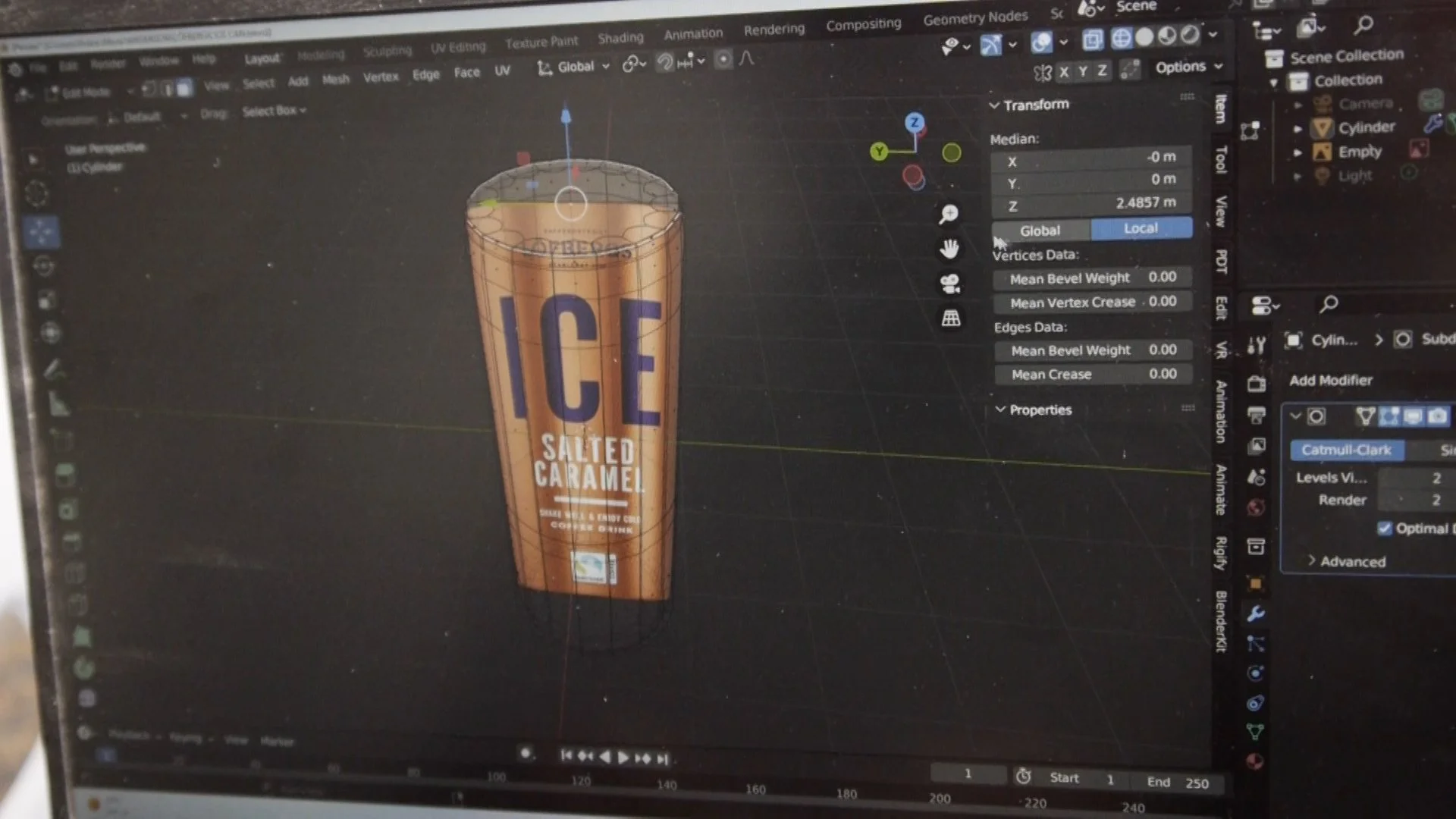
If you're using Blender's 3D modelling and rendering tools, for example, the software supports modelling, materials, rendering and several other production tasks. That makes it useful for many remote creative workflows, although the exact software and file formats should always be agreed on before hiring.
What Should You Check Before Hiring a Remote 3D Artist?
First, look at their actual work. A portfolio will tell you much more than a list of software applications on a CV.
If you need furniture models, ask to see furniture work. If you need architectural visualisation, look for examples that show an understanding of lighting, materials, scale and composition.
Next, find out how the artist handles communication and revisions. You want to know when you'll receive the first preview, how feedback will be shared and what happens if something needs changing.
Ask about file formats too. A beautiful image isn't much use if you actually needed an editable model for your own production team.
It's also worth discussing ownership and commercial usage rights. Make sure you understand whether you're purchasing finished renders, editable files or both, and what rights you have to use the work.
If you're hiring someone for the first time, consider starting with one clearly defined paid assignment before committing to a larger project. It's a sensible way for both sides to understand each other's expectations.
Why Consider Affordable 3D Modelling Services from Refugee Artists in Kenya?
Let's be practical about this.
If you're a furniture manufacturer in Helsinki, a creative agency in Espoo or an architectural studio in Tampere, your first concern is probably not where your 3D artist lives.
You want the work done properly.
You want someone who can follow a brief, communicate when something isn't clear, respond to feedback and deliver what you've agreed on.
That's exactly the kind of professional experience we're working to help our graduates develop.
Creative Gateway doesn't expect businesses to hire someone simply because they're a refugee. We want our graduates to be considered because they have useful skills and deserve the opportunity to demonstrate them.
You Can Explore a More Affordable Way to Get 3D Work Done
Hiring a remote artist gives you access to people beyond the Finnish market, which can create more choice when comparing quotes.
That doesn't automatically mean every remote artist will be cheaper, or that the lowest quote is the best one. But it does give you another option when you're balancing quality, deadlines and cost.
If you're working with a limited budget, particularly on a smaller project, it may be worth discussing your requirements with Creative Gateway before making a hiring decision.
You Can Start Small and Build the Relationship
You don't need to begin with a huge assignment.
Perhaps you have one product that needs modelling, a small collection of furniture or a clearly defined task within a larger project.
A smaller paid assignment gives you the chance to evaluate the artist's work, communication and ability to follow your requirements.
If it goes well, that relationship could grow into further assignments.
For our graduates, those first projects are especially meaningful. They help build professional experience, strengthen portfolios and create the possibility of repeat work.
Your Project Can Create a Real Employment Opportunity
There's another side to this that makes Creative Gateway different.
When you commission work from one of our graduates, you're not just purchasing a digital asset. You're helping someone access a professional opportunity that might otherwise have been difficult to reach.
In Kakuma, access to international clients is a major challenge. Our graduates can develop technical skills, but finding consistent paid work is another matter.
We've written about this in our article on the challenges of digital freelancing in Kakuma.
For a European business, a small modelling assignment might be one item on a long project list. For an emerging artist in Kakuma, that same assignment could become a valuable portfolio piece, a professional reference or the beginning of a longer working relationship.
And the best part is that the relationship doesn't have to be based on charity. It can begin with a straightforward commercial exchange: you need quality 3D work, and a trained artist is looking for the opportunity to provide it.

How to Hire a 3D Modeller Through Creative Gateway
If you're considering Creative Gateway for your next project, the best place to start is by telling us what you need.
You don't need to prepare a complicated proposal. A short description of your project is enough to begin the conversation.
It helps if you can share the type of model you need, what you intend to use it for, any photographs or drawings you already have, your preferred file formats and your expected deadline.
If you have a budget in mind, let us know that too. It makes it easier to discuss what may be possible within your budget.
We can then discuss your requirements, the relevant skills needed and whether there are graduates who may be a suitable match for the assignment.
If you're not quite ready to commission a full project, you can also ask about starting with a smaller paid task.
Looking for Affordable 3D Modelling Services in Finland? Let's Talk.
Whether you're a furniture brand preparing a new collection, an architect who needs modelling support or a creative studio with more work than your team can handle, we'd love to hear about your project.
You don't have to limit your search to artists based in Finland. There are talented people building their careers in other parts of the world, and some of them may be exactly the people you're looking for.
At Creative Gateway, we're working to connect those artists with businesses that need their skills.
If you have a 3D modelling project coming up, why not give us the opportunity to show you what our graduates can do?
Get in touch with Creative Gateway or email our Project Lead, Vincent Forsman, at vincent@ambitiousafrica.org.
Tell us what you're working on, and let's see whether we can help you find the right artist for the job.