
After Fleeing Everything, How Does a Refugee in Kenya Actually Build a New Life?

When people are forced to flee their homes because of war, conflict or persecution, survival becomes the immediate priority. Finding safety, shelter, food, healthcare and protection can mean the difference between life and death.
But while reaching safety may bring an end to one crisis, it also marks the beginning of another: rebuilding a life that has been turned upside down.
Reaching safety does not mean life suddenly returns to normal. Once the immediate crisis has passed, people begin asking the same questions that any of us would ask if we had lost everything.
How do I provide for myself and my family? How do I earn an income? How do I rebuild what I have lost? How do I create a future instead of simply getting through each day?
These are not just practical questions. They are deeply human ones.
While displacement changes almost every aspect of a person's life, it does not erase the knowledge, skills and experience they have spent years building.
A teacher does not stop being a teacher because they have become a refugee.
An accountant does not lose years of experience.
A mechanic does not forget how to repair an engine.
An entrepreneur does not suddenly lose the ability to identify opportunities or build a business. The skills, creativity and ambition that existed before displacement remain.
What often changes is access to opportunity.
Conflict forces people to leave behind their jobs, businesses, professional networks and customers. Qualifications may not be recognised in a new country. Access to finance often becomes limited. Finding employment is difficult, and starting a business often comes with barriers that did not exist before displacement.
The challenge is rarely a lack of talent or willingness to work. More often, it is the loss of the opportunities that once allowed those skills to become a livelihood.
This is why the conversation about refugees cannot end with safety alone. Safety protects lives, but it does not rebuild them. Rebuilding requires opportunity: the opportunity to work, earn an income, contribute to society and regain a sense of independence and purpose.
This is where the idea of economic inclusion comes in.
What Does Economic Inclusion Look Like in Practice?
When people hear the term economic inclusion, it's easy to think it simply means helping refugees find jobs.
Employment is certainly part of the picture, but economic inclusion is much broader than that.
At its heart, economic inclusion is about making sure refugees have the same opportunity to participate in the economy as everyone else. It means having the chance to earn a living, use existing skills, develop new ones, access financial services, start or grow a business, find employment, connect with markets and build a sustainable livelihood.
This is an important distinction.
Economic inclusion isn't a single programme or a one-off intervention. It isn't achieved simply because someone has completed a training course or received a grant.
Instead, it is created when the different pieces that people need to succeed begin to come together. That includes access to education and skills development. It includes access to financial services, technology and the internet. It includes opportunities to find employment, reach customers, build professional networks and participate in local markets.
It also depends on policies and systems that recognise refugees' right to work and enable them to contribute alongside host communities rather than being excluded from the economy.
Think about it this way.
Imagine we teach someone to become an excellent 3D modeller. They finish the course with strong technical skills and a portfolio they're proud of.
But they don't have a laptop capable of running the software. They can't access reliable internet. They don't know where to find clients. They have no professional network, no payment solution and no way to market their services.
Have we achieved economic inclusion?
Probably not.
Skills matter. But skills alone rarely create livelihoods.
Economic inclusion happens when people have both the capability and the opportunity to use those capabilities to earn a living. It is about connecting talent to opportunity and ensuring that displacement does not become a permanent barrier to participating in the economy.
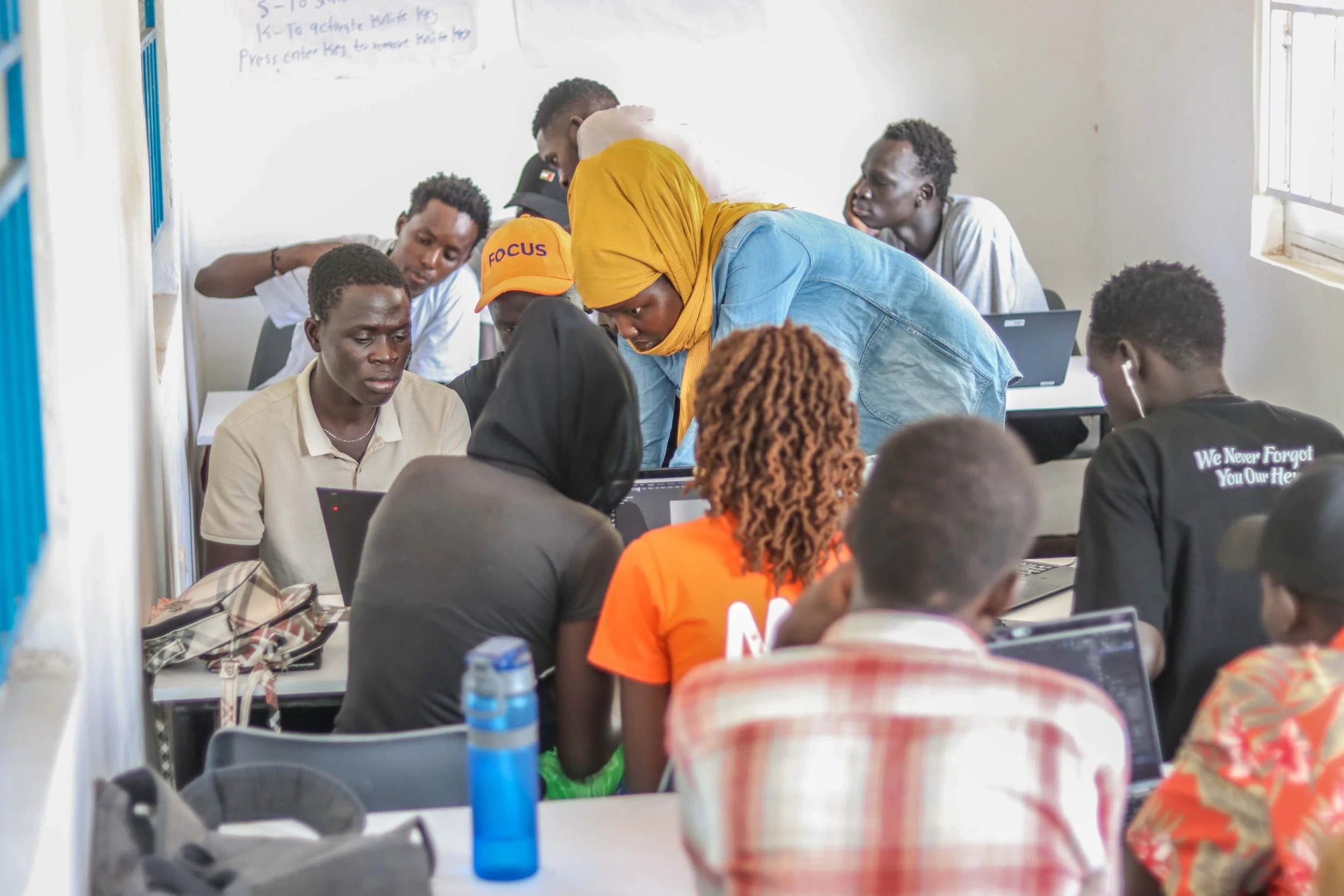
What economic inclusion looks like at the Creative Gateway Program
Economic inclusion can take many forms. It might involve helping someone find employment, start a business or access financial services. Increasingly, it also means preparing people for opportunities in the digital economy.
Technology is changing the way people work. Today, many careers no longer depend entirely on where someone lives, but on the skills people have and their ability to connect with opportunities online. This makes the digital economy particularly significant for refugees, allowing talented individuals to reach clients, employers and markets that would otherwise be beyond their physical location.
This is the approach that has shaped The Creative Gateway's work from the very beginning.
Over the past seven cohorts, we have trained refugee youth in Kakuma in 3D modelling, equipping them with technical skills that are in demand across industries such as architecture, engineering, manufacturing and product design. But our work has always been about more than teaching software.
We believe economic inclusion happens when digital skills lead to livelihoods.
That means helping participants build professional portfolios, develop the confidence to work with international clients and understand the expectations of the global digital marketplace. Most importantly, we actively connect our graduates with clients in Europe, creating opportunities for them to apply their skills on real commercial projects and earn an income from their work.
This approach reflects the very idea of economic inclusion. Training provides the skills, but meaningful work provides the opportunity to turn those skills into sustainable livelihoods.
Every 3D modelling graduate who completes a project for a European client, earns their first income or begins building a professional career demonstrates what economic inclusion looks like in practice. It shows that a refugee camp does not have to be the limit of someone's ambitions or potential.
If you'd like to support pathways that help refugee youth in Kakuma build digital skills, gain real work experience and earn an income, we'd love to hear from you.
Whether you're looking to become a funding partner, connect graduates with paid opportunities or explore other ways to support the programme, we're always open to thoughtful conversations.
Email our Project Lead, Vincent: vincent@ambitiousafrica.org
Or get in touch through The Creative Gateway Contact Page.
Together, we can help more young people build careers, not just complete training.