
Kenya’s refugee work rights: What the law says VS. what happens in practice

In 2021, Kenya passed what was widely considered one of the most progressive refugee laws in the region. The Refugee Act (2021) formally granted recognised refugees the right to work, a move that signalled a shift in policy thinking. Rather than viewing refugees purely as recipients of humanitarian assistance, the law acknowledged them as individuals capable of participating in and contributing to Kenya’s economy.
On paper, this was a meaningful step forward. It aligned Kenya with international protection standards and reflected a broader policy shift toward integration and self-reliance.
Yet several years later, the lived experience of many refugees tells a more complicated story.
A recent report by the Refugee-Led Research Hub and the Amahoro Coalition, Pathways to Formal Employment in Kenya, documents what many refugees have quietly experienced: the right to work exists in legislation, but the pathway to exercising that right remains uncertain, slow, and often inaccessible.
From where we sit, working directly with refugee youth in Kakuma, this gap between law and practice is not theoretical. It influences career choices, shapes ambitions, and often determines whether young people pursue formal employment at all.
What the Refugee Act Actually Promised
Section 28 of the Refugee Act allows recognised refugees to engage in gainful employment and practice professions where their qualifications are recognised under Kenyan law. This is significant because it moves beyond temporary tolerance and toward formal recognition of economic participation.
The Act reflects Kenya’s commitments under the 1951 Refugee Convention and aligns with global frameworks such as the Global Compact on Refugees, which emphasise inclusion and self-reliance as sustainable solutions.
In principle, this means that a qualified refugee should be able to apply for employment in Kenya in the same way that other legally recognised residents can, subject to professional standards and licensing requirements.
However, the Act grants a right - it does not automatically simplify the systems required to exercise that right. And this is where complexity begins to accumulate. The legal recognition is clear. The administrative route is not.
The Class M Work Permit Catch-22
Although the Refugee Act grants refugees the right to work, it does not remove them from immigration procedures. In practice, recognised refugees must still apply for a Class M work permit under the Kenya Citizenship and Immigration Act. This permit is handled by the Directorate of Immigration Services, which operates separately from the Department of Refugee Services.
On paper, this may look like a normal administrative process. In reality, it creates practical complications.
To apply for a Class M permit, a refugee must submit:
A recommendation from the Department of Refugee Services
A UNHCR recognition letter
A Kenya Revenue Authority (KRA) PIN
A formal employment offer
This is where the problem begins.
Most employers require proof of a valid work permit before issuing a job offer. At the same time, refugees need a formal employment offer in order to apply for the work permit.
The result is a circular process that is difficult to break. An employer waits for a permit. A refugee waits for a job offer. Neither can move forward without the other.
In practice, this creates delay and uncertainty for everyone involved.
From our experience working with refugee youth in Kakuma, this is not just paperwork. It shapes behaviour. Employers often hesitate to start a process that may take months or even years, especially when approval criteria are unclear. Refugees hesitate to apply for roles when they know the administrative path is long and unpredictable.
Over time, this discourages participation before it even begins.
When applications are rejected with brief explanations such as “No merit,” without clear reasoning, trust in the system weakens further. Refugees are left unsure of what went wrong or how to improve their chances. Employers receive no clear signal about what qualifies as approval-worthy.
The issue is not that the law is designed to exclude refugees. The problem lies in how different institutions operate separately, how documentation is sequenced, and how procedures are implemented in practice.
The systems involved are not fully aligned in a way that makes the right to work simple or predictable to exercise. As a result, a right that exists clearly in law becomes difficult to access in reality.
Even if documentation hurdles were simplified, another structural issue remains: mobility.
Kenya currently hosts over 836,000 refugees and asylum seekers. Nearly 300,000 live in Kakuma and Kalobeyei, and roughly half reside in Dadaab. Only about 106,000 live in urban centres such as Nairobi and Mombasa, where formal employment opportunities are concentrated.
Camp-based refugees must apply for special movement passes to travel outside the camp for employment purposes.
In practical terms, this means that if a refugee in Kakuma secures an interview in Nairobi, they must first obtain permission to travel. If a job offer materialises, additional approvals may be required for relocation. Delays in processing can cause employers to withdraw offers or move on to other candidates.
This layered dependency reduces autonomy.
The right to work becomes conditional on mobility. Mobility becomes conditional on administrative approval. The result is a labour market participation model that is technically permitted but structurally constrained. For employers seeking predictability and speed, these layers introduce risk. For refugees, they introduce uncertainty that shapes career decisions from the outset.
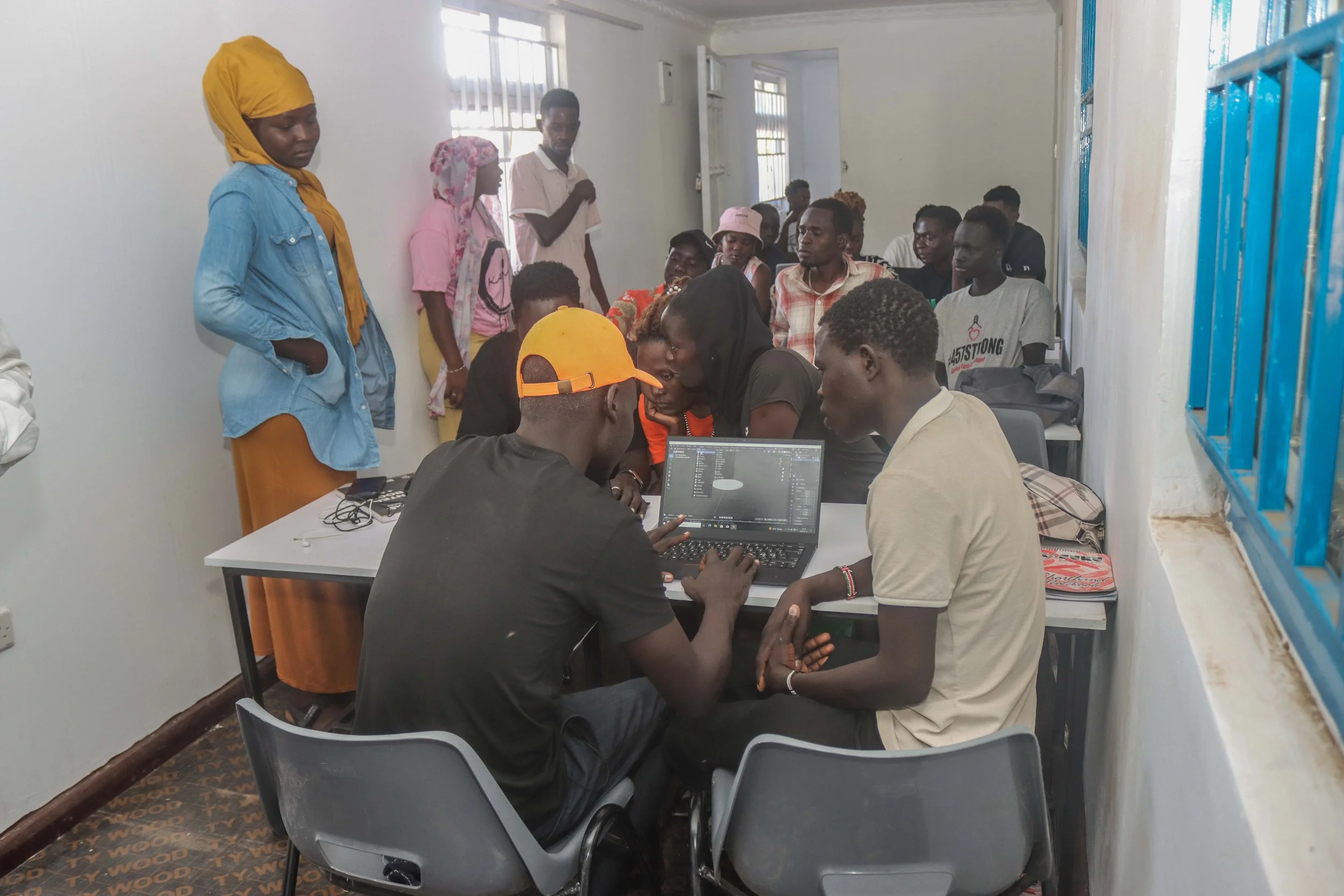
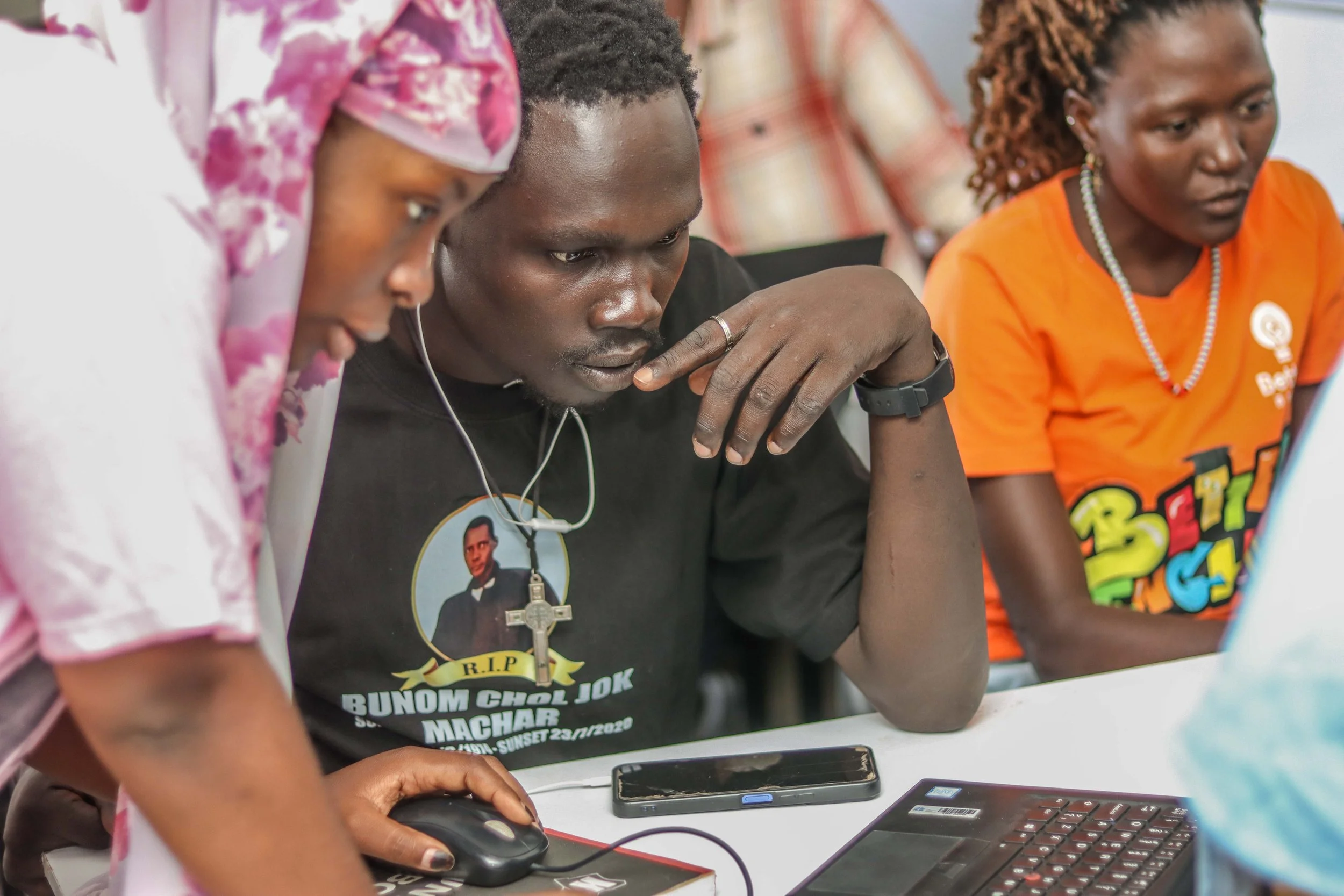
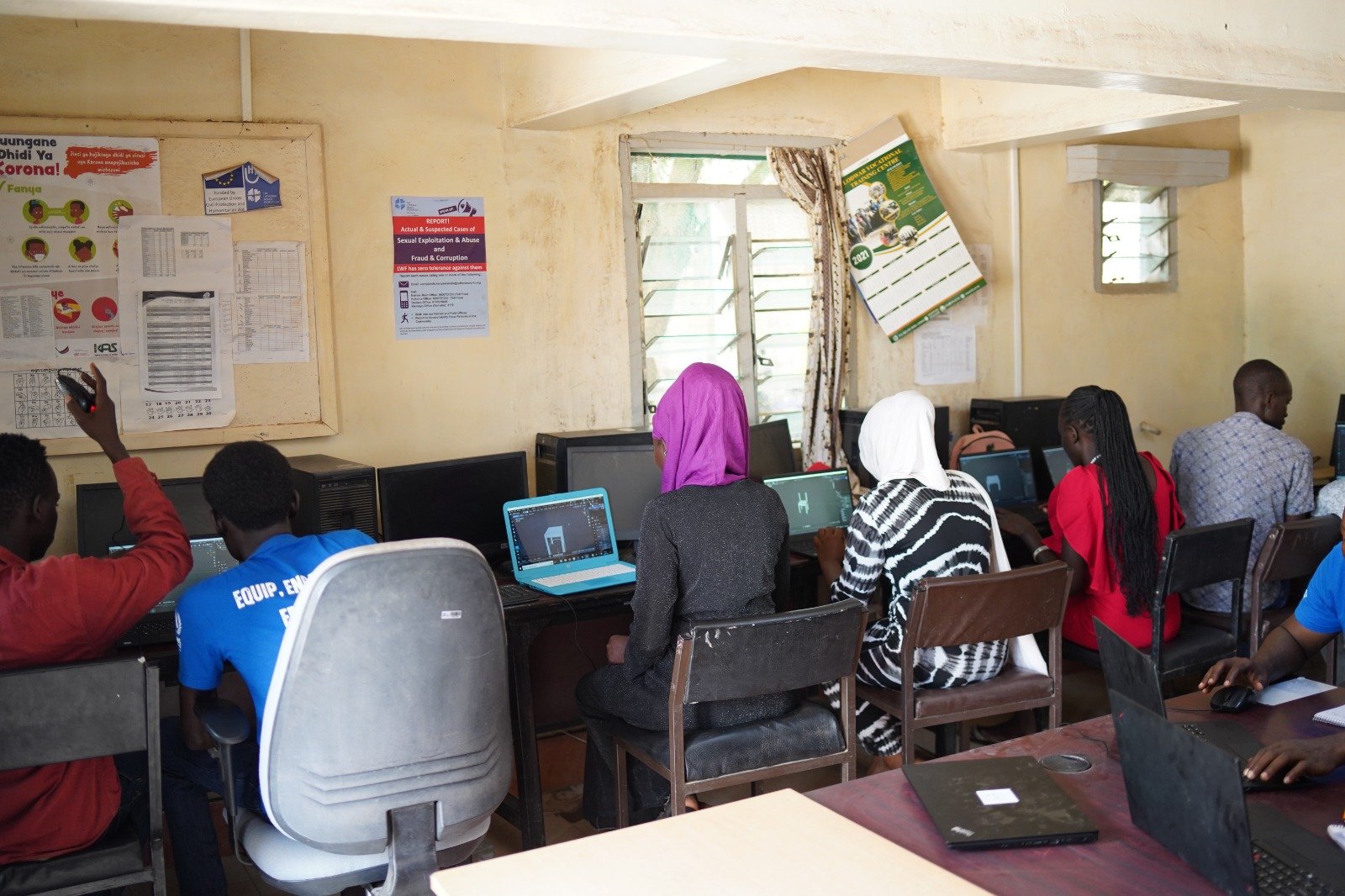
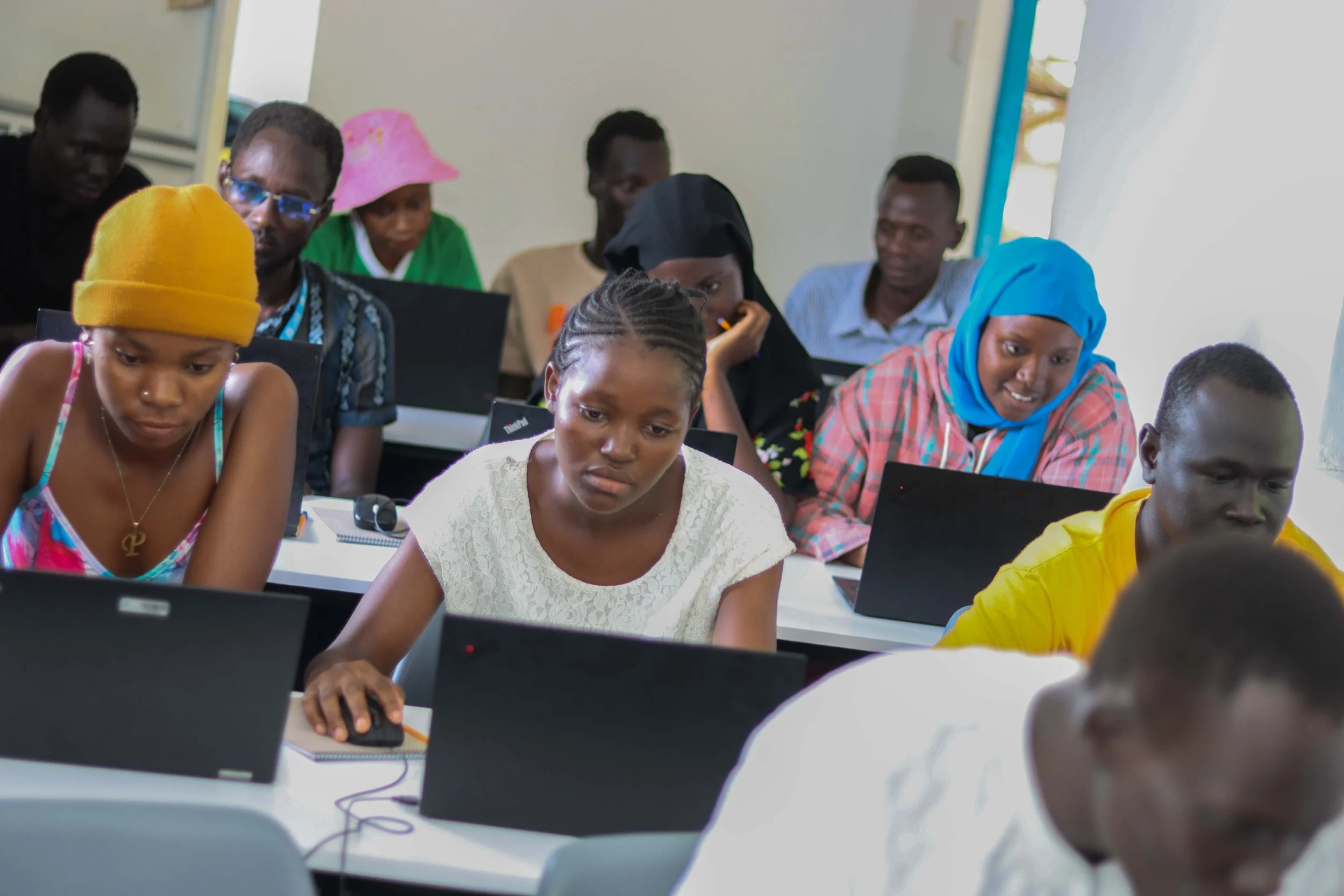
At Creative Gateway, we train refugee youth in Kakuma in digital skills, particularly 3D modelling and online service delivery. What we observe consistently is that the barrier is not capability.
Our trainees build professional portfolios. They complete complex assignments. They meet deadlines. They communicate with international clients. The challenge lies in navigating the formal employment ecosystem.
Many graduates express interest in structured employment roles, yet they are acutely aware of permit complexities and mobility constraints. Over time, this awareness shapes their decisions. Rather than pursuing formal pathways that may stall indefinitely, many pivot toward remote digital work.
Digital freelancing does not require:
A Class M permit
Physical relocation
Employer sponsorship
Proof that their skills are “special” in a regulatory sense
It requires skill, connectivity, and market access. This does not mean digital work replaces formal employment reform. It means that in the absence of accessible formal pathways, digital livelihoods become a practical alternative.
Why Refugee Employment Benefits Kenya’s Economy
This issue is not only about protection or rights. It is also about economic logic. Kenya positions itself as East Africa’s largest economy and a regional centre for innovation, technology, and international institutions. Nairobi hosts major United Nations offices and global agencies. The country seeks to attract investment and expand its digital and knowledge-based sectors.
At the same time, hundreds of thousands of legally recognised residents are limited in how they can participate in the formal economy.
Unlocking refugee employment is not an act of charity. It is an expansion of the labour market.
When refugees are able to work formally:
Aid dependency decreases over time.
Tax participation increases.
Spending power grows within host communities.
Local businesses gain customers.
Supply chains become stronger and more diverse.
When capable individuals are prevented from contributing, economic potential is left unused. In a country focused on growth and competitiveness, that is a missed opportunity.
Reform Is Possible
The situation is not fixed or irreversible. The Amahoro Coalition report outlines practical recommendations that could improve access without requiring major ideological change. These include:
Simplifying or reconsidering the Class M permit requirement
Improving coordination between refugee and immigration authorities
Integrating refugee IDs into national digital systems
Accelerating the issuance and renewal of refugee identity documents
Expanding support for digital skills and remote work pathways
These are administrative improvements. They focus on alignment and efficiency rather than rewriting the law. If implemented carefully, they would shift the right to work from symbolic recognition to functional access. The law already exists. The systems need to catch up.
Conclusion
Kenya has already taken an important first step by recognising refugees’ right to work in legislation. The next step is ensuring that administrative systems make that right usable in everyday life.
Until documentation processes are clearer, digital infrastructure is fully integrated, and mobility policies are more predictable, refugees will continue operating at the edges of the formal economy rather than fully within it.
Digital work has emerged not as a substitute for reform, but as a practical response to structural barriers. It allows individuals to earn despite bottlenecks in the formal system.
The long-term solution is not a choice between formal employment and digital livelihoods. It requires both. Formal employment pathways must be simplified and clarified. On the other hand, digital and remote income opportunities should continue to expand.
The law states that refugees can work. The responsibility now lies with the system to make that statement a lived reality.