
Visiting Kakuma? What Donors and Funders Should Look for Beyond the Programme Report
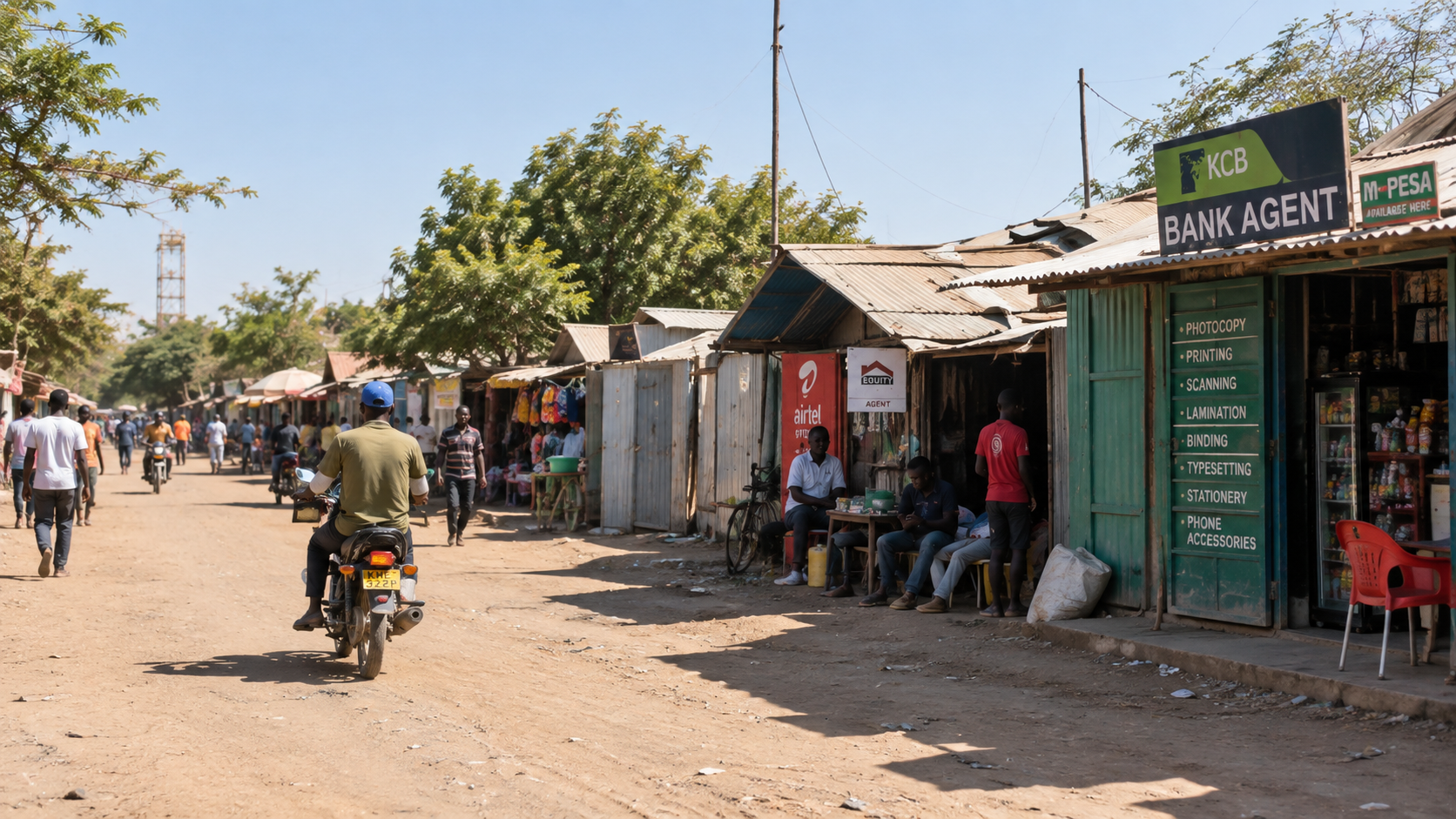
If you are a donor or funder planning a visit to Kakuma Refugee Camp to see a programme your organisation supports or is considering funding, you will probably know quite a lot about it before you arrive.
You may have read the proposal and progress reports, seen the participant numbers, reviewed the budget and received photographs showing activities taking place.
A visit gives you something those documents cannot: the chance to understand the environment in which the programme is actually trying to work.
We have learnt the importance of this through our own experience running Creative Gateway in Kakuma. Our pilot did many of the things we hoped it would do, but it also confronted us with transport difficulties, participant dropouts, equipment limitations, expectations we hadn't anticipated and pressure on our facilitators. At the same time, we saw participants supporting one another, graduates taking on new roles and outcomes emerging that we hadn't necessarily planned for at the beginning. Many of those lessons are documented openly in our Creative Gateway pilot assessment. Creative Gateway+1
Those experiences have changed some of the questions we think are worth asking when visiting programmes in Kakuma.
Don't let the itinerary be the only Kakuma you see
A donor visit has to be organised. Meetings need to be scheduled, participants brought together and activities prepared around the limited time available. The danger is that you can travel all the way to Kakuma, follow a carefully prepared itinerary and still leave having seen the programme mainly as it appears when everything is in place.
Pay attention to the journey around the programme too. How far do people travel to reach the service? What does that journey cost? What happens during heavy rains? How reliable are electricity and internet access? If equipment breaks, how easily can it be repaired or replaced? These details can appear secondary when designing a programme from somewhere else, but on the ground they can determine whether people are actually able to participate.
We saw this during the Creative Gateway pilot. Some learners travelled considerable distances to attend, and transport wasn't always reliable. Rain could make some routes difficult, while limited access to laptops and reliable internet created additional barriers. Our assessment found, for example, that one participant faced a roughly five-kilometre walk to the Creative Hub, while transport and muddy roads during heavy rain were significant enough to contribute to some participants dropping out. Creative Gateway+1
When somebody stops attending, a spreadsheet records a dropout. Being in Kakuma gives you the opportunity to understand the circumstances behind that number.
Ask about the people you aren't meeting
Programme visits naturally introduce donors to the people currently participating, and often to some of the strongest success stories. There is nothing wrong with that, but they represent only part of the picture.
Ask who joined but didn't finish, who wanted to participate but couldn't, and who the programme consistently struggles to reach. Then ask why. Depending on the programme, the answer might involve distance, cost, disability, family responsibilities, information, cultural expectations, eligibility requirements or something nobody considered when the project was designed.
Our Creative Gateway pilot made this particularly clear. We began with 40 participants across the first two cohorts, but only 11 were approaching graduation at the time of the pilot assessment. Understanding that figure required looking beyond whether the training itself was good. Transport, access to technology and participant expectations were among the issues we had to examine. Creative Gateway
This question remains relevant even as a programme grows. In a later Creative Gateway cohort, applications had risen to more than 300 for only 20 available places. That created a different version of the same question: not only who is participating, but who wants the opportunity and cannot currently access it. Creative Gateway
A donor who only meets the people in the room may therefore be seeing something real, but not necessarily the whole story.
Look beyond the boundaries of the programme you came to visit
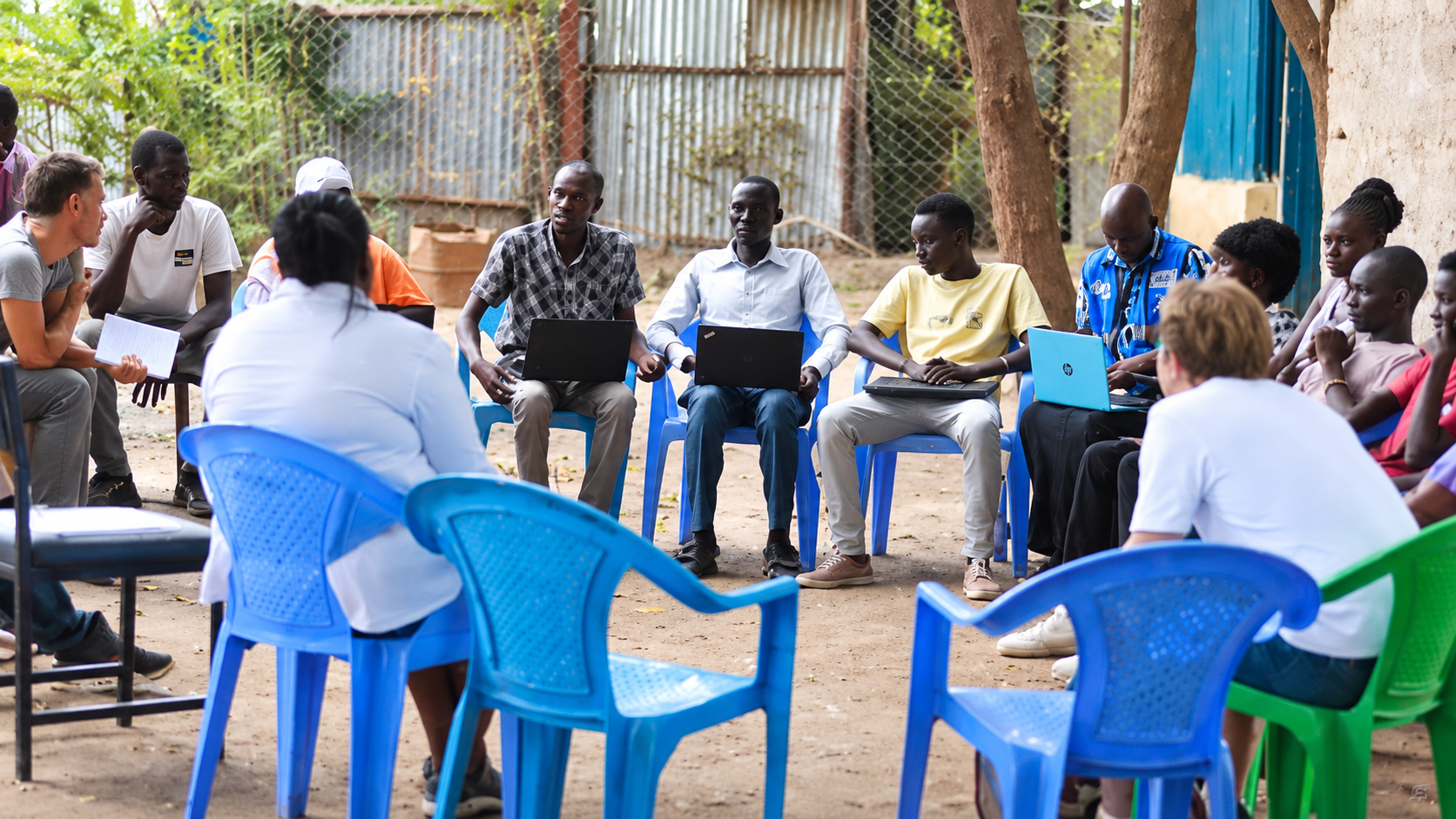
Kakuma isn't a collection of separate projects. It is a place where people live, work, raise families, start businesses, study and interact with many different organisations and services.
This is particularly important because the wider Kakuma operation includes Kakuma Refugee Camp and the Kalobeyei Integrated Settlement, and the ecosystem includes government, UN agencies, development and private-sector actors, implementing partners, refugee-led organisations and community-led organisations. UNHCR's overview of Kakuma Refugee Camp provides useful background on that wider environment. UNHCR
Someone participating in the programme you fund may therefore also be interacting with another NGO, a refugee-led organisation, a school, a local business, a government service or another programme addressing a different part of the same problem. Host communities are part of this environment too.
This is worth exploring during a visit. Who else is working on the same issue? Where are organisations duplicating effort? What is missing? Could two existing programmes achieve more by connecting with one another?
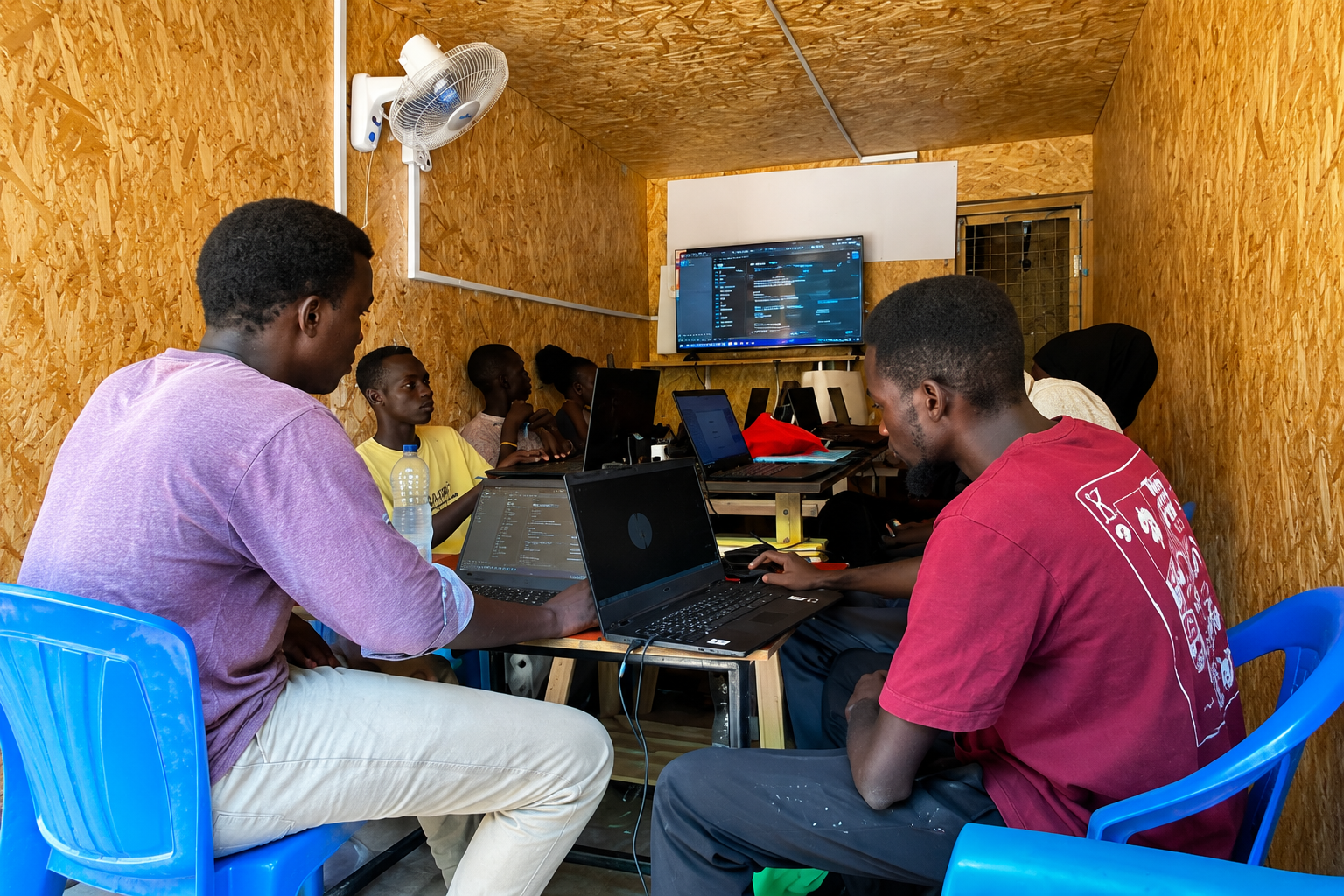
Creative Gateway itself taught us why this matters. Teaching 3D modelling required much more than a trainer delivering lessons. Learners needed computers capable of running the software, internet connectivity, somewhere to work and opportunities to continue practising. The Creative Hub was developed specifically to provide equipment, workspace and internet access, while the programme also brought in private-sector expertise and opportunities for participants to work on real projects. Creative Gateway+1
The lesson is broader than digital skills. A programme may be responsible for one part of somebody's journey without being able - or needing - to provide everything else.
Ask what didn't work, and listen carefully to the answer
One of the most useful questions you can ask a programme team is not about their biggest success. Ask them what they got wrong.
Creative Gateway's pilot gave us several answers to that question. Facilitator workload became heavier than expected. Some participants arrived with expectations that didn't always match what the programme was designed to provide. Transport affected participation. We also learnt that completing technical training did not mean somebody was automatically ready to work independently. Creative Gateway
Those findings required changes. At one point, rather than simply continuing to add another cohort, training was postponed while the programme reorganised. Graduates also began supporting newer participants as assistant facilitators and mentors. The pilot assessment records why the team made that decision: adding another cohort would have increased pressure on an already stretched local facilitator, so quality was prioritised over simply increasing the number of participants. Creative Gateway
That learning has continued as Creative Gateway has grown. By Cohort VI, the programme was explicitly using what previous cohorts had taught us to improve facilitation, pacing, expectations and the pathway from learning into work. Creative Gateway
For a funder, the interesting part isn't that problems occurred. Problems will occur in almost any programme operating in a complex environment. What matters is whether the organisation recognised them, understood why they were happening and changed something as a result.
A programme that can comfortably tell you, “We thought this would work, it didn't, and here is what we changed,” may be showing you something very valuable about how it operates.
Look for capability, not only need
Most people arriving in Kakuma will already have read extensively about the needs facing refugees and host communities. Those needs are real and important, but they shouldn't become the only lens through which you see the people you meet.
Ask what people are already doing. What businesses have they started? What are they creating? What skills do they already have? Who is teaching other people? Who has found a way around a problem? What would somebody pursue further if the right equipment, connection, mentorship or opportunity became available?
This has been one of the most interesting parts of our experience with Creative Gateway. A report can tell a donor that a young person has received training in 3D modelling. Sitting beside that person while they open their computer, show you what they have created and explain what they are trying to achieve gives you a different understanding of them.
Some of the strongest evidence comes from what happens afterwards. Brian Ekiru's journey from learner to 3D modeller, freelancer and peer facilitator is one example of why following individual journeys can reveal things that programme numbers cannot. Creative Gateway Zuwena's experience similarly shows how a participant can move from learning a new skill to completing paid 3D modelling assignments. Her story is documented here. Creative Gateway
You are no longer looking only at what somebody lacks. You are also seeing what they can already do.
That distinction matters far beyond Creative Gateway. A person described as a beneficiary in a proposal may also be an entrepreneur, teacher, organiser, artist, technician, future employee or potential partner.
Follow what your funding made possible
Funders understandably want to see what their money paid for. If you funded computers, you want to know that the computers arrived. If you funded a facility, you want to see it. If you funded an activity, you want evidence that it happened.
Once you've established that, go one step further and ask what became possible because that resource existed.
During the Creative Gateway pilot, laptops, workspace and internet access weren't simply programme inputs. The Creative Hub created a place where participants could attend classes, practise, work together and continue developing their skills. Donated laptops were being used daily, while external partners contributed technical expertise and real project opportunities. Creative Gateway+1
That chain has continued beyond the pilot. Graduates have gone on to freelance, support newer learners and work on client projects, although our experience has also shown that moving from digital training into consistent freelance work is harder than it can appear. Access to skills is only one part of the journey; access to clients, experience and continued support matters too. Creative Gateway
The same question can be asked of almost any intervention in Kakuma. If you funded water infrastructure, what changed around it? If you supported a business, did it create opportunities for anyone else? If you funded a health service, did it change how or when people sought care?
Sometimes the most important effect of an investment happens one or two steps beyond the thing that appears in the budget.
Ask what happened that nobody planned
Programme proposals are written before programmes encounter reality. It should therefore not be surprising when something valuable happens that nobody thought to put into the original results framework.
Our pilot assessment found examples of this in Creative Gateway. Participants talked about sharing what they learnt with siblings and their communities. Graduates began mentoring newer learners, and participants from different communities found common ground through learning and working together. The assessment identified these cross-community relationships as an unexpected area worth watching as the programme developed. Creative Gateway
A useful question during a visit is therefore: “What has happened here that you didn't expect?”
The answer could reveal a new problem, but it could just as easily reveal an opportunity the programme should pursue further.
Leave Kakuma with something you couldn't have learnt from the report
A donor visit should still answer the basic accountability questions. Did the programme happen? Were resources used appropriately? Are the people it was intended to reach actually benefiting?
But travelling to Kakuma gives you the chance to ask questions that go beyond verification. Who isn't being reached, and why? What assumptions turned out to be wrong? What is already working that could be strengthened? What are people doing for themselves? What unexpected changes are happening around the programme? Where could another organisation, another kind of expertise or another investment make a difference?
Those are the questions that have become more important to us through the years of building, assessing and adapting Creative Gateway. In fact, one of the most useful observations in our original pilot assessment came from the person conducting it after spending time in Kakuma: even a month on the ground could only begin to reveal the realities behind the programme and the lives of the people participating in it. Creative Gateway
The report tells you what the programme said it would do and what it has been able to measure. Being there allows you to understand the people, conditions, possibilities and problems behind those numbers - and sometimes to see an opportunity nobody knew to put in the report.
Planning a Visit to Kakuma? Come and See Creative Gateway!
If you are a donor, funder, development organisation or potential partner planning a visit to Kakuma, we would be happy to welcome you to Creative Gateway.
Come and meet the team and the young people taking part in the programme, visit the Creative Hub, see the 3D modelling work being produced and learn more about what we have discovered through building the programme on the ground.
Whether you are already supporting work in Kakuma, exploring where your organisation could contribute, or simply want to understand more about digital skills and creative opportunities for refugees and host communities, we would be happy to have the conversation.
Email our Project Lead, Vincent:
Have questions or want to arrange a visit?