
World Refugee Day 2026: If Safety Means Opportunity, What Does Kenya's Shirika Plan Mean for Refugees?
The Nation Newspaper recently published an article titled “Kenya wants to close refugee camps: the promise and risks.”
When you first read that headline, it sounds alarming. Kenya wants to close refugee camps?
Does that mean refugees are being sent away?
Does it mean camps like Kakuma and Dadaab will simply be shut down?
The timing makes the headline feel even more serious. This year, the world is marking World Refugee Day under the theme “Until Everyone Is Safe.”
So on one hand, the world is talking about safety, dignity and protection for refugees. On the other hand, Kenya is talking about closing refugee camps.
At first, that sounds like a contradiction. But when you read the article, that is not really what it is saying.
The conversation is not about closing camps and abandoning refugees. It is actually about changing the refugee camp model.
For many years, refugee camps have been places of protection. They have given shelter to people fleeing war, conflict and danger. For many families, camps like Kakuma and Dadaab have meant survival.
But many refugees have now lived in these camps for years. Some have lived there for decades. Some young people were born there and have never known another home.
That raises a hard question. Is safety only about having a place to stay? Or is safety also about having the chance to work, study, move freely, earn income and build a future?
The Shirika Plan is Kenya’s attempt to answer that question.
Instead of keeping refugees in long-term camps, the plan aims to turn camps into county-administered municipalities. The idea is to include refugees more fully in the local economy while also investing in roads, water, health care, education and services that benefit both refugees and host communities.
In simple terms, the plan is trying to move from keeping refugees in camps to helping them participate in society.
That is a very different conversation from what the headline first suggests.
It also connects deeply with this year’s World Refugee Day theme. Because “Until Everyone Is Safe” cannot only mean protection from danger. It must also mean dignity. It must mean opportunity. It must mean the chance to rebuild your life.
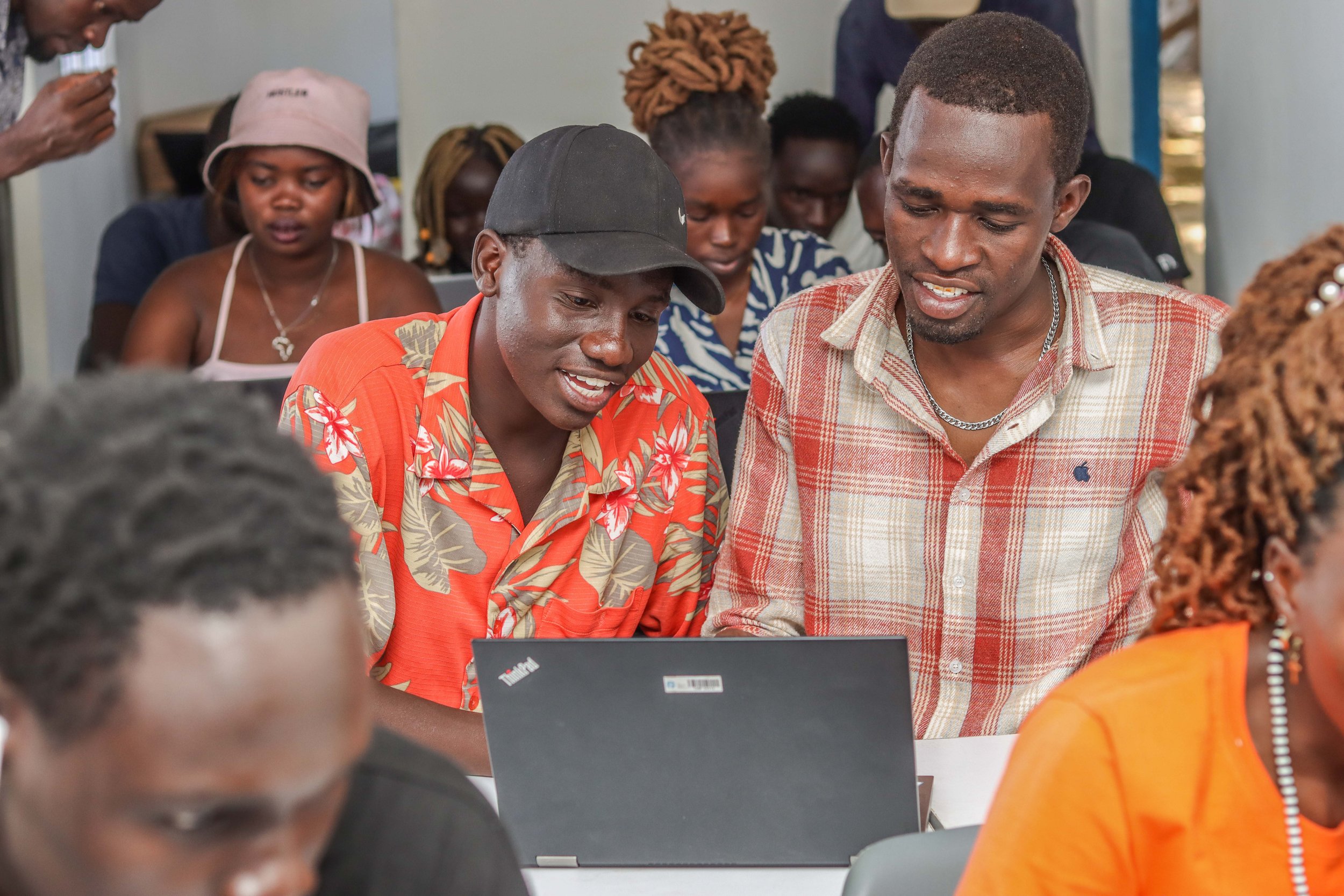
At Creative Gateway, we have seen this first-hand through our work with refugee youth in Kakuma. We have seen young people learn 3D modelling and digital skills. We have seen them earn income online, support their families and start seeing themselves as professionals with something valuable to offer the world.
That kind of opportunity changes how a young person sees the future. It does not remove every challenge. It does not solve everything. But it gives young people a path beyond waiting.
And that is why this conversation matters.
If the Shirika Plan works, it could open new doors for refugees and host communities. It could create more room for skills, jobs, enterprise and local growth.
But if it is done poorly, it could also create fear, confusion and deeper struggle for people who are already vulnerable.
That is why refugees must be part of the conversation.Not as statistics. Not as people being spoken for. As people with real experience, real concerns and real ideas about what safety should look like.
So What Is the Shirika Plan?
At its core, the Shirika Plan is an attempt to rethink how refugees live in Kenya.
Today, most refugees live in camps such as Kakuma and Dadaab, where many families have spent years and sometimes decades. Under the new plan, the government wants to gradually transform these camps into municipalities that function more like towns. Rather than existing separately from surrounding communities, these areas would become places where refugees and host communities live, learn, work and access services together.
The plan also includes investment in infrastructure such as roads, water systems, schools and health facilities. These investments are intended to benefit both refugees and the communities that host them. The idea is that development should not only support refugees but also improve the lives of local residents who share the same resources and public services.
Another major part of the plan focuses on economic participation. The goal is to create more opportunities for refugees to work, start businesses, access training and contribute to local economies. Instead of relying primarily on humanitarian assistance, the long-term vision is to help more refugees become self-reliant while strengthening the economies of the areas where they live.
It is an ambitious plan, and there are still many questions about how it will be implemented. But at its heart, the Shirika Plan is asking a simple question: after decades of hosting refugees in camps, is there a better way to help refugees and host communities build a shared future together?
What Could This Mean for Refugee Youth?
For many refugee youth, the biggest challenge is not simply finding safety. It is finding opportunity.
Across refugee camps in Kenya, thousands of young people are eager to learn, work and build better futures for themselves and their families. Yet access to jobs, training opportunities and income-generating activities remains limited.
This is where the conversation around the Shirika Plan becomes particularly interesting.
If the plan succeeds in creating stronger links between refugees and local economies, it could open new opportunities for young people to access education, training, employment and entrepreneurship. Instead of being seen only as beneficiaries of aid, more refugee youth could have opportunities to contribute their skills, talents and ideas to the economy.
At Creative Gateway, we have seen what happens when young people are given access to digital skills. Through our 3D modelling training programme in Kakuma, young refugees have learned skills that connect them to opportunities beyond the camp.
Most have worked on real client projects. Many have earned income. Others have discovered talents they never knew they had.
That is why this conversation matters. The future of refugee youth should not be measured only by how well they are protected. It should also be measured by how many opportunities they have to learn, work, create and build independent lives.
This Is a 12-Year Journey, Not an Overnight Change
It is also important to understand that the Shirika Plan is not something that will happen overnight. The plan is expected to be implemented over a period of about 12 years, giving both refugees and host communities time to adjust to the changes.
The first phase, which runs from 2025 to 2028, is known as the transition phase. This stage focuses on laying the foundation for the entire plan. It includes putting policies and systems in place, strengthening local institutions and beginning the process of transforming refugee camps into municipalities. It is also a period for building capacity and preparing communities for what comes next.
The second phase, running from 2029 to 2032, is the stabilisation phase. By this point, the focus shifts towards strengthening the systems that have been put in place. The government and its partners will assess what is working, address challenges and continue building the institutions needed to support both refugees and host communities. This phase also places emphasis on peaceful coexistence and ensuring that communities are able to grow together.
The final phase, from 2033 to 2036, is known as the resilience phase. The goal at this stage is to create communities that are less dependent on external aid and better able to support themselves. The hope is that by this point, stronger local economies, better services and increased opportunities will allow both refugees and host communities to build more sustainable futures.
Until Everyone Is Safe
The success of the Shirika Plan will not be measured by policy documents, announcements or infrastructure projects alone.
It will be measured by people.
It will be measured by whether a young refugee can access quality education.
It will be measured by whether someone can learn a skill and find meaningful work.
It will be measured by whether families can build stable futures for themselves.
And it will be measured by whether refugees and host communities are able to grow together and share in the opportunities created.
At Creative Gateway, we believe that skills are part of that journey. Every young person who learns a skill, earns an income, starts a business or finds meaningful work takes a step closer to independence and dignity.
As Kenya begins this long transition, there is an opportunity for governments, development partners, businesses, educators and training institutions to work together to ensure that refugee youth are not left behind.
Because if the future is one of greater participation, then young people must be equipped to participate.
If the future is one of greater opportunity, then young people must have access to the skills needed to seize those opportunities.
And if this year's World Refugee Day theme is "Until Everyone Is Safe," then perhaps safety is not only about protection from danger.
Perhaps it is also about creating the conditions for people to learn, work, contribute and build meaningful lives of their own.
If you would like to explore ways to support refugee youth through skills development, mentorship, training opportunities or employment pathways, we would love to hear from you.
Together, we can help ensure that opportunity reaches the young people who need it most.
If you want to be part of that - as a partner, a funder, an employer, or someone simply curious - let’s connect.
📩 Email our Project Lead, Vincent: vincent@ambitiousafrica.org🔗 Have questions about the program? Reach out here: Creative Gateway Contact Page